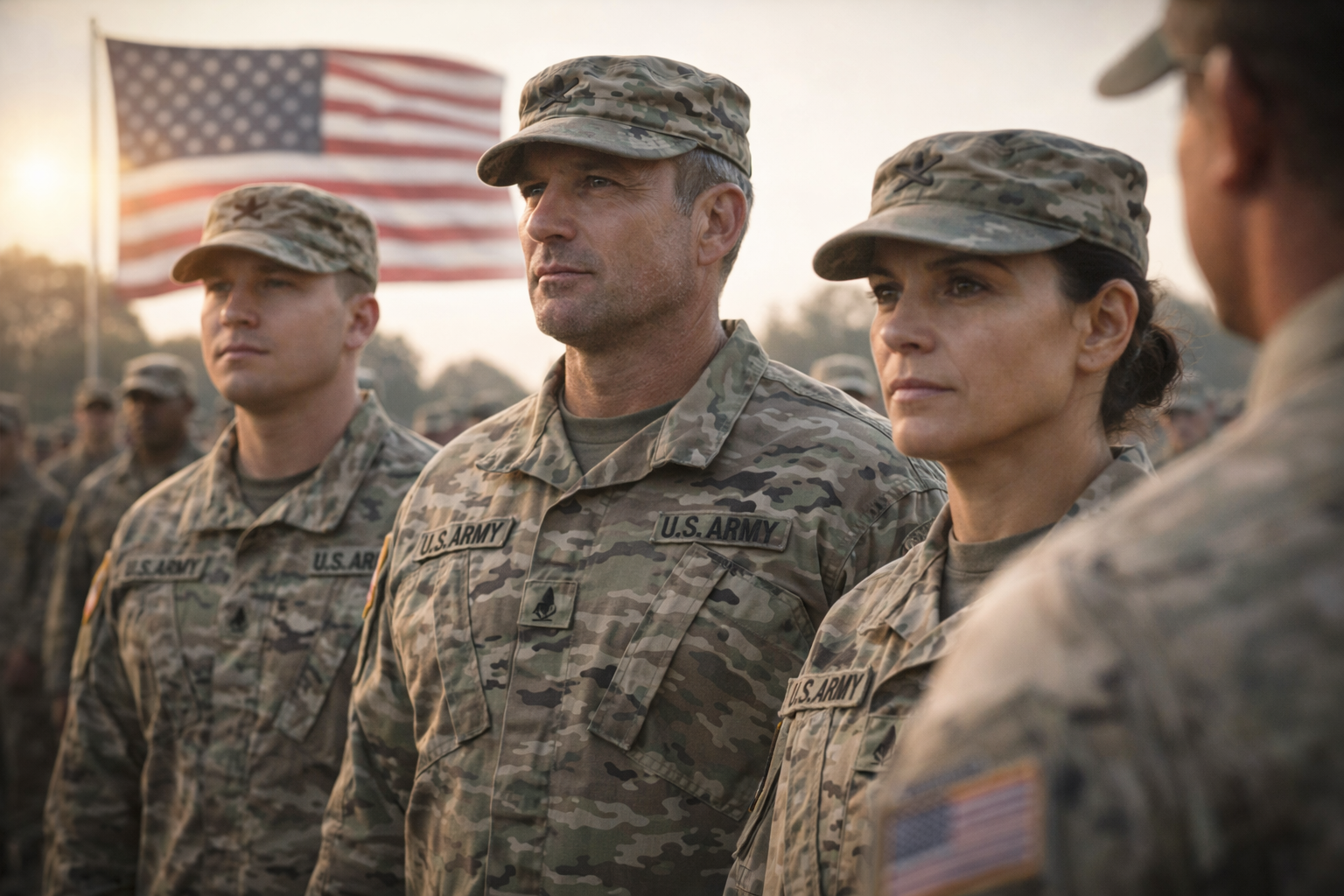
The U.S. Army is expanding who can serve by raising the maximum enlistment age from 35 to 42, a shift aimed at broadening the pool of eligible recruits. The updated policy, outlined in Army Regulation 601–210 and set to take effect April 20, reflects a longer-term strategy to address ongoing recruiting challenges rather than any single geopolitical event.
This change marks a return to a previous standard. The Army last allowed enlistment up to age 42 in 2006 during the height of operations in Iraq and Afghanistan, before lowering the cap to 35 in 2016. By restoring the higher age limit, the Army now aligns more closely with other military branches such as the Air Force and Navy, which accept recruits into their early 40s. The Marine Corps remains more restrictive, generally limiting enlistment to those under 28, though waivers are sometimes granted.
The decision comes as the military faces a shrinking pool of eligible candidates. Pentagon estimates suggest that only about 23% of Americans aged 17 to 24 meet the requirements for service. Factors such as academic performance, physical fitness, and criminal history continue to limit eligibility. In response, the Army has gradually adjusted its policies to reach a broader audience.
One of the more recent changes includes allowing individuals with a single marijuana-related conviction to enlist without needing a waiver. Previously, such cases required additional approval and screening. This adjustment reflects evolving societal norms and aims to remove barriers that may have excluded otherwise qualified applicants.
Recruiting data shows a gradual shift in the demographics of new enlistees. The average age of recruits has risen from around 21 in 2010 to nearly 23 in recent years. While younger individuals still make up the majority, the Army increasingly sees value in attracting older candidates, particularly those with technical skills or professional experience.
Leaders within the Army have pointed to the benefits of a more mature recruiting base. Older recruits often bring discipline, work experience, and specialized knowledge that can be valuable in roles requiring technical expertise. This is especially important as the Army continues to modernize and place greater emphasis on advanced systems and operations.
Research has supported this approach. A 2022 study by RAND found that older recruits tend to perform well, with those aged 25 to 35 showing lower dropout rates during initial training and a higher likelihood of reenlisting compared to younger peers. Recruiters have also described older candidates as more focused and motivated.
However, challenges remain. The same research indicates that recruits in their late 30s and early 40s may face higher attrition rates and could find the physical demands of basic training more difficult. Balancing these factors will be key as the Army implements the new policy.
Despite these concerns, recent recruiting trends have been encouraging. In fiscal year 2025, the Army exceeded its goal by bringing in more than 62,000 new soldiers after falling short in previous years. Officials hope that expanding eligibility will help sustain this momentum and ensure the force remains strong in the years ahead.
Overall, the policy shift signals a pragmatic approach to recruitment, recognizing that the traditional pool of young candidates alone may no longer be sufficient to meet the Army’s needs.
This image is the property of The New Dispatch LLC and is not licenseable for external use without explicit written permission.