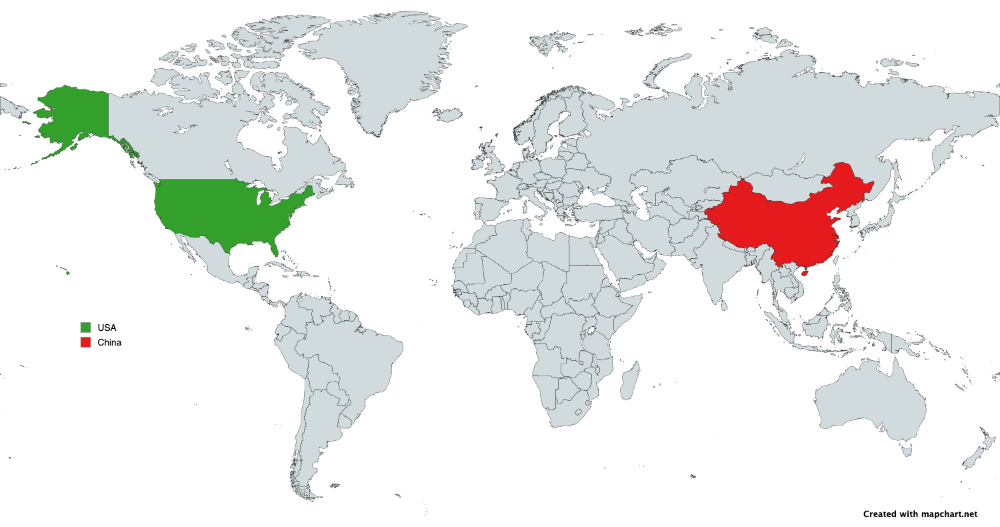
The United States and China traded accusations at the United Nations’ annual Commission on Narcotic Drugs meeting in Vienna, where officials from both countries debated responsibility for the global fentanyl crisis and raised concerns tied to trade policy. The dispute comes as leaders from both nations prepare to meet later this month in China.
During the meeting, U.S. officials accused China of failing to adequately control the export of chemical precursors used to manufacture fentanyl, a synthetic opioid that has contributed to widespread overdose deaths in the United States and other countries. American representatives argued that chemical producers in China manufacture large quantities of the substances needed to make the drug and that weak export oversight allows these materials to reach international criminal networks.
Sara Carter, director of the White House Office of National Drug Control Policy, said U.S. authorities have identified China as a major source of fentanyl precursor chemicals. She stated that the ingredients used to produce the drug are manufactured in extremely large volumes and that insufficient enforcement enables suppliers to maintain connections with trafficking organizations.
Carter also pointed to what she described as uneven regulatory practices in China. According to her remarks, while Beijing strictly manages exports of rare earth minerals that are essential for global industries, similar enforcement has not been applied to chemicals associated with fentanyl production. She said this difference has allowed criminal groups to gain access to materials used in manufacturing the drug.
Chinese representatives rejected the accusations. Gao Wei, China’s envoy at the meeting, said the claims made by the United States were inaccurate and criticized Washington for linking the drug crisis to trade measures and political pressure.
In his statement, Gao argued that some countries are using drug-related concerns as justification for unilateral actions, including sanctions and tariffs. Such measures, he said, can harm international cooperation and make it more difficult for nations to work together to combat illegal narcotics. Gao urged countries to strengthen their own domestic control systems and prioritize collaborative international efforts.
The disagreement also reflects broader disputes between Washington and Beijing related to trade policies and global supply chains. Last year, the two countries reached an agreement during talks in South Korea that addressed several of these issues.
Under that arrangement, the United States agreed to reduce certain tariffs on Chinese goods. In return, China pledged to strengthen enforcement aimed at limiting the export of chemicals used to produce fentanyl. The agreement also included commitments for China to resume purchases of U.S. soybeans and to continue exporting rare earth minerals used in electronics and manufacturing.
Recent developments have complicated the situation. In February, the U.S. Supreme Court invalidated a 10 percent fentanyl-related tariff that had been imposed by the Trump administration under emergency authority. Officials in Washington have said the administration plans to reinstate the tariff through a different legal approach.
The exchange at the Vienna meeting shows how disputes over drug control have become linked with economic and diplomatic competition between the two countries. As President Donald Trump and President Xi Jinping prepare for their upcoming meeting, issues surrounding fentanyl chemicals, trade policy, and international cooperation are expected to remain central topics in discussions between the two governments.
USA = Green
China = Red
European Countries in the New Cooperation Talks = Teal
Image is licensed under the Creative Commons Attribution-Share Alike 4.0 International license and was created using MapChart (https://mapchart.net).