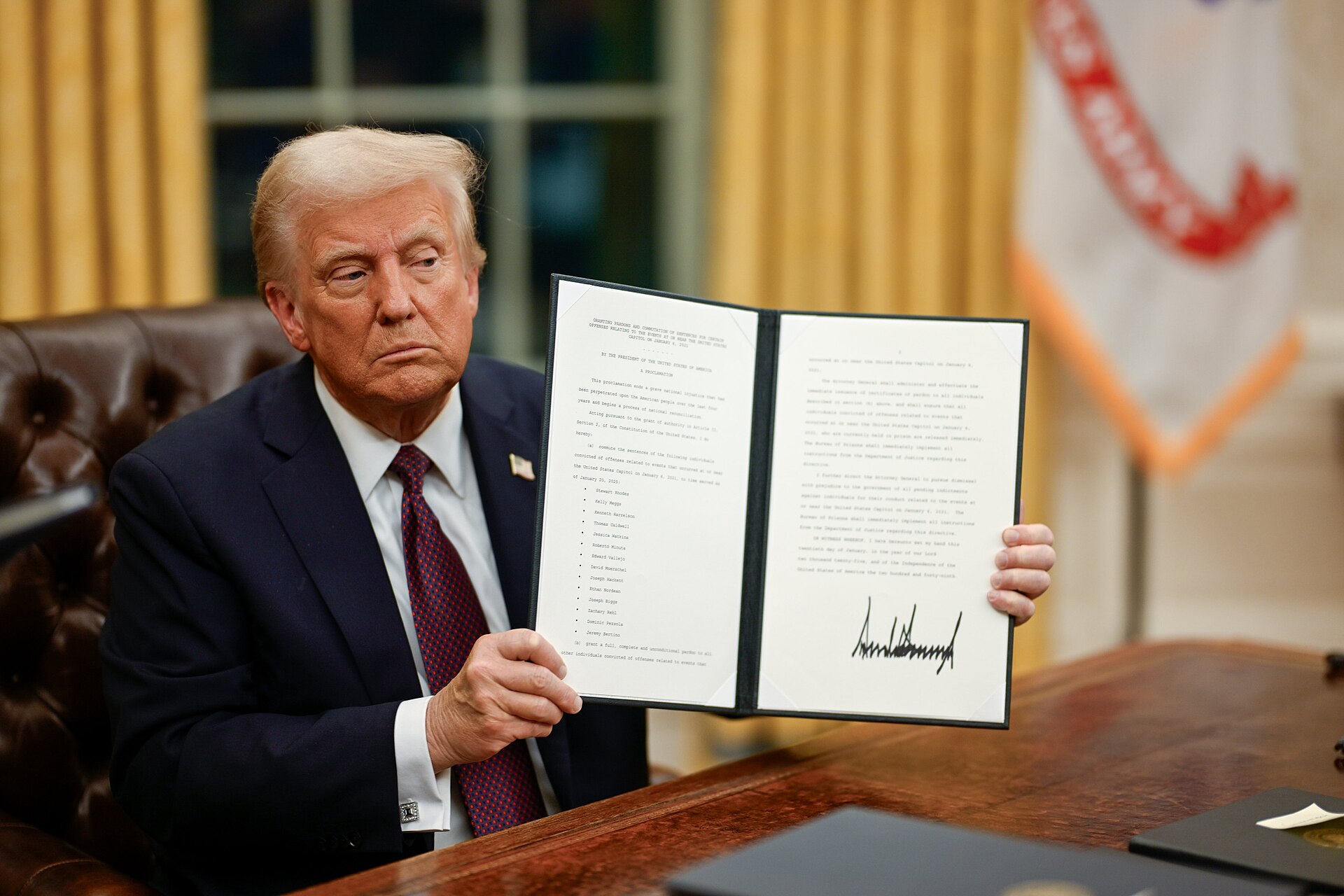
President Donald Trump has issued a new executive order aimed at reshaping the single-family housing market by limiting purchases by large institutional investors. The White House says the directive is designed to ease pressure on homebuyers by ensuring that families, rather than corporate investors, have a clearer path to owning a home.
The order directs federal agencies to change how government-backed housing programs operate. Agencies are instructed to stop approving or supporting transactions that allow large investment firms to acquire single-family homes when those homes could instead be sold to individual buyers. This includes restricting federal involvement in insuring, guaranteeing, or securitizing mortgages tied to institutional purchases.
A key component of the order is the promotion of policies that give individuals priority access to available homes. Federal agencies are instructed to expand “first-look” programs, which allow owner-occupants and smaller, non-institutional buyers to make offers on foreclosed properties before larger investors are allowed to participate. The administration argues this approach can help stabilize neighborhoods and increase opportunities for first-time buyers.
The Treasury Department is also tasked with reviewing existing regulations related to the ownership and acquisition of single-family homes by institutional investors. This review may lead to changes intended to discourage large-scale consolidation of homes by corporate landlords. In parallel, the Justice Department and the Federal Trade Commission are directed to examine major acquisitions in local housing markets for potential anti-competitive behavior, including pricing and vacancy practices that could limit consumer choice or drive up rents.
The Department of Housing and Urban Development will be required to increase transparency within federal housing assistance programs. Under the order, landlords participating in these programs must disclose ownership structures, allowing the government to better identify properties tied to large investment firms. The administration says this information will help ensure federal resources are aligned with the goal of supporting individual homeownership.
Beyond regulatory actions, the White House is instructed to develop legislative proposals that would formalize these policies through Congress. The administration has made clear that it wants these limits on institutional ownership to extend beyond executive action and become part of federal law.
Trump has linked the order to broader affordability concerns, arguing that rising prices and borrowing costs have made it harder for families to buy starter homes. The administration contends that institutional investors, armed with large pools of capital, have been able to outbid individual buyers in many communities, converting homes into rental properties and reducing the number available for purchase.
According to government data, institutional ownership of single-family rental homes has expanded over the past decade, drawing criticism from lawmakers in both parties. While Democrats have long raised concerns about corporate homebuying, Trump’s move places the issue at the center of his housing agenda as congressional elections approach.
The executive order builds on earlier actions taken by the administration to lower housing costs, including directing federal mortgage entities to purchase large volumes of mortgage-backed securities to reduce borrowing expenses. Together, the White House says these steps reflect a broader effort to put families first in the housing market and reinforce the idea that stable homeownership remains a cornerstone of economic security.
Image is is in the public domain and was created by The Trump White House.