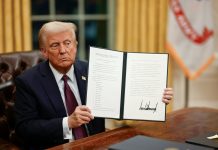
President Donald Trump has renewed debate over the cost of consumer credit by urging Congress to pass legislation that would cap credit card interest rates at 10% for one year. Speaking Wednesday at the World Economic Forum in Davos, Switzerland, Trump argued that current rates, which often exceed 25% and can climb above 30%, place an unfair burden on American households and make it harder for families to save and build wealth.
Trump framed the proposal as part of a broader affordability push during an election year, saying lower interest costs would help millions of Americans work toward goals such as homeownership. Earlier this month, he had called on banks to voluntarily reduce rates through a social media post, at one point suggesting that noncompliance could violate the law. Administration officials later clarified that any binding cap would require action from Congress, prompting the president to formally ask lawmakers to step in.
Financial markets appeared untroubled by the comments. Bank stocks moved higher following Trump’s remarks, with the KBW Bank Index rising more than 2% in morning trading. Shares of Capital One, a lender heavily reliant on credit card revenue, also gained. Analysts noted that a legislative approach, rather than regulatory pressure, may be less threatening to banks given the difficulty of passing such a bill.
A proposal similar to Trump’s request already exists. Senators Josh Hawley and Bernie Sanders introduced legislation last year that would limit annual percentage rates on credit cards to 10% for five years, but it has stalled amid resistance from both parties. Many Republican leaders, including House Speaker Mike Johnson, have expressed unease about government-imposed price controls. Wall Street analysts say bipartisan support remains uncertain, even with Trump’s influence over GOP lawmakers.
Banks and industry groups have pushed back strongly, warning that a hard cap could lead lenders to tighten credit standards or close accounts, especially for borrowers with lower credit scores. On earnings calls earlier this month, executives said such limits could reduce access to credit rather than improve affordability. JPMorgan Chase CEO Jamie Dimon echoed those concerns in Davos, calling the proposal an “economic disaster” and suggesting it be tested in only two states as a cautionary example. He argued that lenders would be unable to price for risk, leading to a sharp contraction in credit card availability.
Credit unions have also criticized the idea, though from a different angle. Scott Simpson, president and CEO of America’s Credit Unions, said a one-year, government-driven cap would ultimately hurt consumers by shrinking access to credit. He pointed instead to credit unions as a market-based alternative, noting that they are member-owned, operate under existing statutory limits, and typically offer lower rates without mandates. America’s Credit Unions has launched a targeted advocacy effort urging lawmakers to reject the cap and focus on expanding access to credit unions.
Supporters of Trump’s proposal counter that there is currently no federal ceiling on credit card interest rates and that debt burdens continue to grow. Total U.S. credit card debt has surpassed $1.2 trillion, while average interest rates have climbed from around 14% in 2021 to above 20% today. Advocates argue that without action, consumers will remain exposed to escalating costs.
Whether Trump’s call will translate into legislation remains uncertain. For now, the debate highlights the tension between curbing high borrowing costs and preserving access to credit in an economy where millions of Americans rely on credit cards for everyday expenses.
This image is the property of The New Dispatch LLC and is not licenseable for external use without explicit written permission.