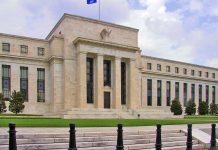
President Donald Trump has nominated former Federal Reserve governor Kevin Warsh to serve as the next chair of the central bank, setting the stage for a contentious confirmation process and a new chapter in the relationship between the White House and the Fed. If confirmed by the Senate, Warsh would replace Jerome Powell when Powell’s term as chair expires in May, placing Warsh at the helm of U.S. monetary policy during a period of debate over interest rates, inflation and the Fed’s independence.
Trump announced the choice on his Truth Social platform, praising Warsh as someone he has known for years and casting him as the right figure to lead the Fed at a time when the president has been pressing aggressively for lower borrowing costs. Trump has repeatedly criticized Powell for what he views as an overly cautious approach to cutting rates, arguing that lower rates are needed to spur growth, revive housing activity and reduce the government’s debt servicing costs.
Warsh, 55, is not new to the Federal Reserve. He served on the Fed’s Board of Governors from 2006 to 2011, after being appointed by President George W. Bush at age 35, making him the youngest person ever to sit on the board. During that period, he worked closely with then-Chair Ben Bernanke as the central bank navigated the financial crisis and its aftermath. After leaving the Fed, Warsh moved into academia and policy circles, holding roles at Stanford University’s Graduate School of Business and the Hoover Institution, while also working with prominent investors.
Throughout much of his career, Warsh built a reputation as an inflation hawk, often warning that loose monetary policy could fuel price pressures. During the Great Recession, he expressed concern about inflation risks even as unemployment surged and growth faltered. He also objected to some of the Fed’s unconventional tools, such as large-scale bond purchases, arguing that they stretched the central bank beyond its core mission. In recent years, however, Warsh has signaled a greater openness to lower rates, while sharply criticizing the Fed’s handling of the inflation surge that followed the pandemic. He has described the institution as facing a credibility problem and has called for sweeping internal changes, while still insisting that monetary policy decisions should remain insulated from day-to-day politics.
The nomination comes against a backdrop of escalating tension between Trump and the Fed. Powell recently disclosed that the central bank and its leadership were hit with subpoenas tied to an investigation into a costly headquarters renovation, which he suggested was meant to intimidate the Fed over its rate decisions. Several Republican senators have condemned the move and warned they may block Fed nominees until the matter is resolved, complicating Warsh’s path to confirmation.
Even if confirmed, Warsh would face limits on how quickly he could deliver the deep rate cuts Trump desires. Interest rates are set by the Federal Open Market Committee, a group of 12 voting members drawn from the Fed’s board and regional banks. While the chair wields influence, decisions depend on consensus, and the committee is divided between officials focused on lingering inflation and those worried about a cooling labor market. Financial markets could also react negatively if cuts are seen as politically driven, potentially pushing long-term rates higher and blunting their intended effect.
Warsh’s nomination highlights Trump’s desire to exert greater influence over the Fed, an institution long valued for its independence. The Senate hearings ahead are likely to probe Warsh’s shifting views on rates, his past disagreements with Fed policy, and how he would balance presidential pressure with the central bank’s mandate to manage inflation and employment.
Image is in the public domain and was created by the U.S. government.