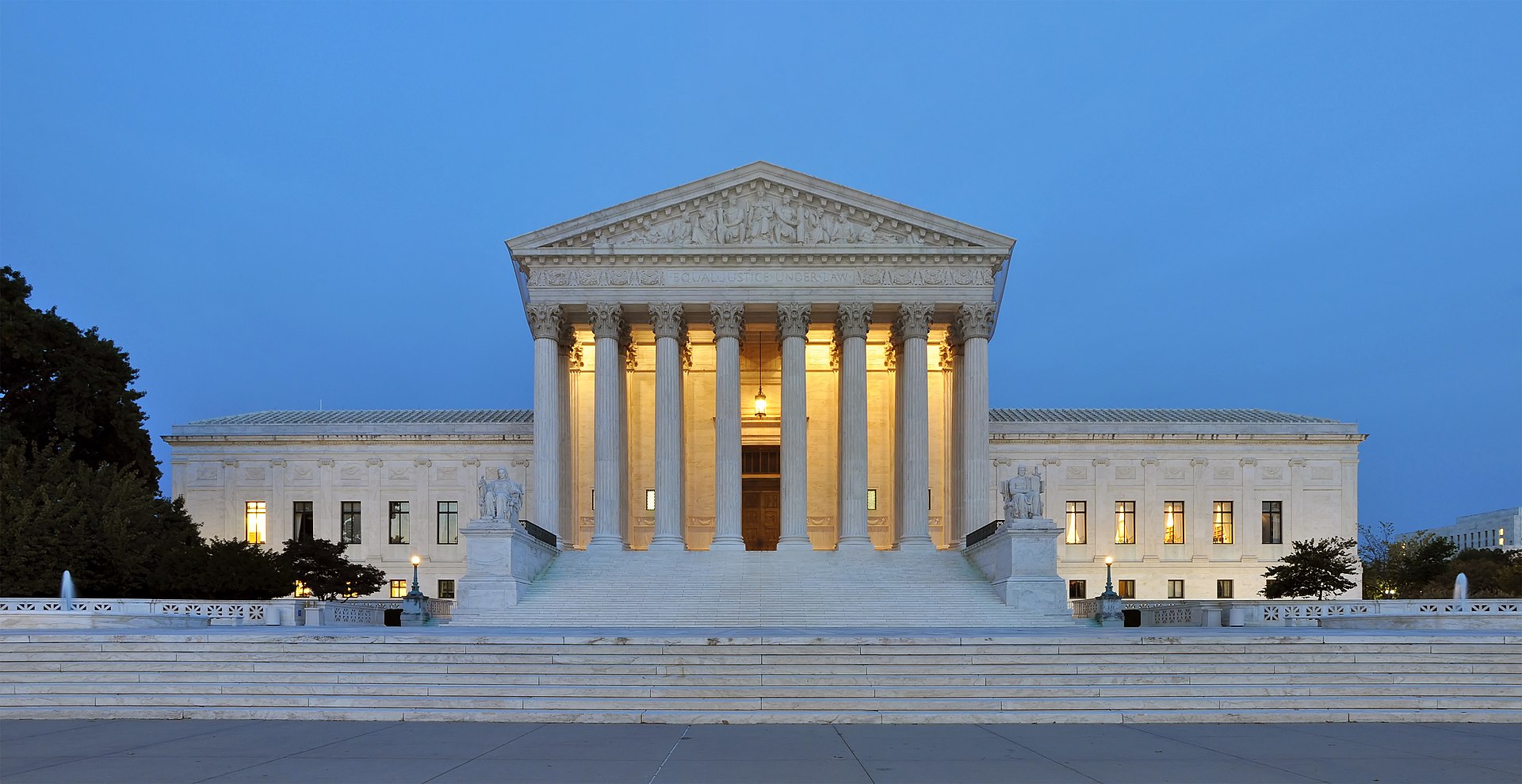
President Donald Trump is set to attend a U.S. Supreme Court hearing on birthright citizenship, an appearance that places him inside the courtroom during oral arguments while still in office. The Supreme Court of the United States will hear challenges to an executive order Trump signed at the start of his second term, which seeks to limit automatic citizenship for children born on U.S. soil to certain categories of parents.
The order departs from a long-standing interpretation of the Fourteenth Amendment, which has generally been understood to grant citizenship to nearly anyone born in the country, with narrow exceptions such as children of foreign diplomats. Trump’s policy would exclude children born to parents who are in the United States without legal status or on temporary visas.
Lower courts have already blocked the order, ruling that it conflicts with constitutional protections and federal law. The Supreme Court is now reviewing one of those rulings, with a decision expected by early summer. During arguments, Chief Justice John Roberts questioned the administration’s reasoning, suggesting that its interpretation of “subject to the jurisdiction” stretches beyond traditional legal examples.
Representing the administration, Solicitor General D. John Sauer argued that the amendment was originally intended to secure citizenship for formerly enslaved people and their descendants, not for children of noncitizens without permanent ties to the country. Opponents of the policy, including civil rights groups, contend that such a reading contradicts more than a century of legal precedent, including the 1898 Wong Kim Ark decision.
Trump’s decision to attend the hearing reflects his continued focus on immigration policy, a central theme of his administration. It also highlights his ongoing tension with the judiciary. He has previously criticized court rulings that went against his policies, including a decision limiting his use of emergency powers for tariffs.
The court case unfolds alongside other major developments. Trump is expected to address the nation regarding tensions with Iran, as the U.S. deploys additional forces to the region aboard the USS George H.W. Bush. At the same time, lawmakers in Congress are debating funding for the Department of Homeland Security and discussing the future of military involvement overseas.
Public opinion presents another challenge for the president. A recent poll conducted by CNN found that approval of Trump’s handling of the economy has declined, with many respondents expressing concern about current conditions and the impact of his policies.
Internationally, allies are also reassessing their positions. British Prime Minister Keir Starmer indicated that the United Kingdom may strengthen ties with European partners amid strain in relations with the United States.
As the Supreme Court weighs the legality of Trump’s order, the case represents a major test of executive authority and constitutional interpretation. The outcome will determine not only the future of birthright citizenship policy but also the limits of presidential power in redefining long-standing legal principles.
Image is licensed under the Creative Commons Attribution-Share Alike 3.0 Unported license and was created by Joe Ravi.