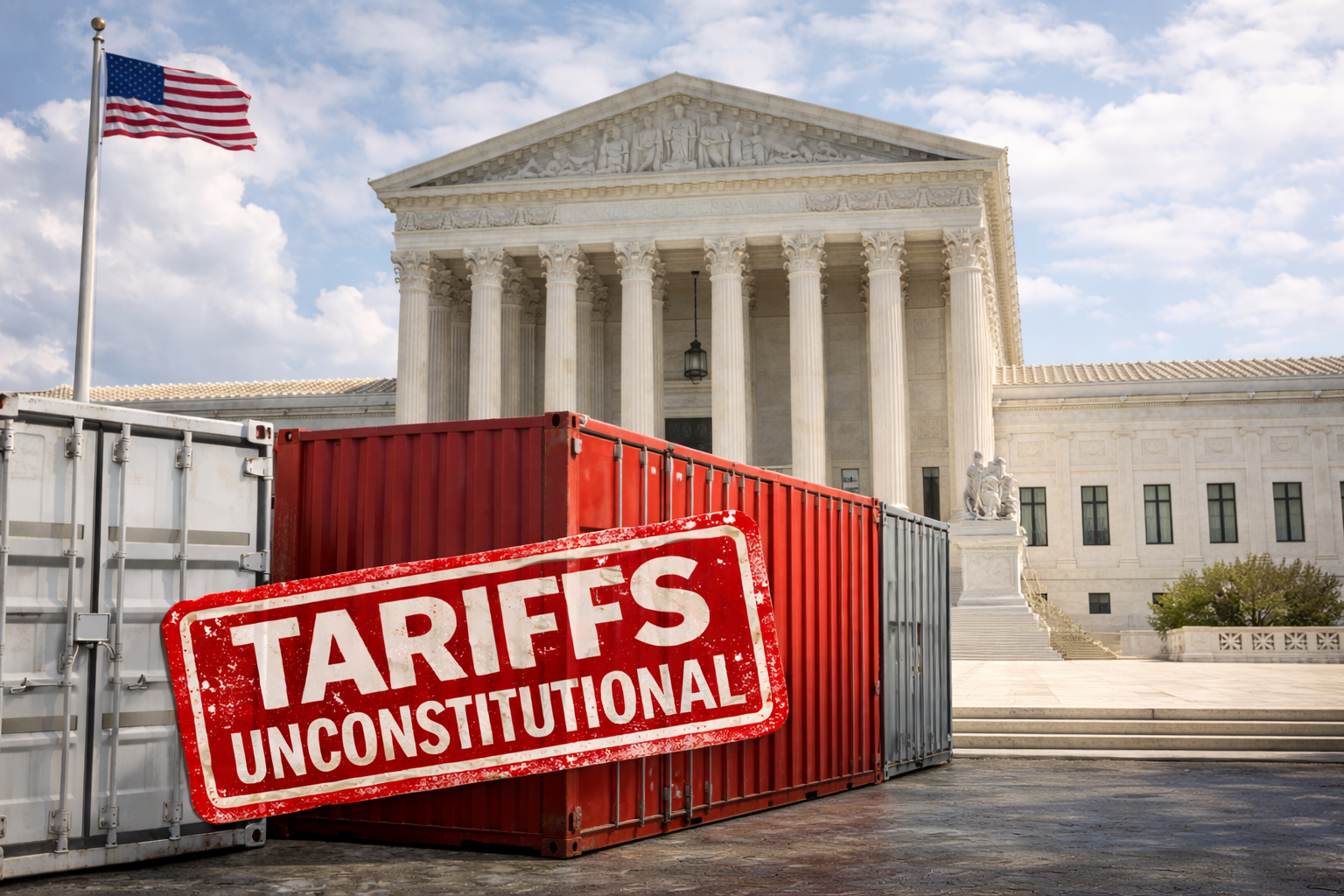
The U.S. Supreme Court delivered a major setback to President Donald Trump’s economic agenda on Friday, ruling 6–3 that his sweeping global tariffs were unconstitutional. The decision blocks one of the central elements of Trump’s trade strategy and raises new questions about executive authority, international trade agreements, and the future of tariff policy in the United States.
At the center of the dispute was Trump’s reliance on the International Emergency Economic Powers Act (IEEPA), a 1977 law that allows presidents to regulate economic transactions during national emergencies tied to foreign threats. Trump used the statute to impose broad tariffs on imports from nearly every country, arguing that persistent trade deficits and the flow of fentanyl into the United States posed dangers to national security and the economy.
Writing for the majority, Chief Justice John Roberts said the Constitution clearly assigns taxing authority to Congress, not the president. The opinion concluded that the emergency law did not grant the executive branch the power to impose tariffs. Roberts noted that although IEEPA allows presidents to regulate importation, the law makes no reference to tariffs or duties. Previous presidents had used the statute dozens of times, primarily to impose sanctions, but none had interpreted it as permission to levy import taxes.
The ruling relied in part on the court’s “major questions” doctrine, which requires clear congressional authorization when the executive branch claims authority over matters with broad economic or political consequences. Roberts wrote that if Congress intended to hand over tariff powers — traditionally tied to taxation — it would have done so explicitly and with limits.
Three conservative justices joined the court’s liberal members in the majority. Justices Brett Kavanaugh, Clarence Thomas, and Samuel Alito dissented. In a lengthy dissent, Kavanaugh argued that tariffs are a traditional tool used to regulate imports and that courts should defer to the president in matters tied to foreign affairs. He warned that the decision could create confusion for trade agreements negotiated while the tariffs were in effect and could require the federal government to refund billions of dollars already collected.
Federal data shows the Treasury gathered more than $130 billion through the tariffs as of late last year, with long-term economic effects estimated in the trillions of dollars. The court declined to address whether businesses would receive refunds, leaving that issue to lower courts and federal agencies.
Trump reacted angrily to the decision, criticizing several justices and insisting the ruling was wrong. Despite the loss, he pledged to pursue alternative legal avenues to continue imposing tariffs, including a temporary 10% global tariff under a different statute that allows emergency trade actions for up to 150 days.
Business groups and small companies that challenged the tariffs welcomed the ruling. Many argued that fluctuating import duties created uncertainty and increased costs for consumers. Retailers and manufacturers had filed lawsuits claiming the administration exceeded its authority and disrupted supply chains.
International partners are also watching closely. European officials said they were seeking clarity on how the United States would proceed, while analysts warned that ongoing policy shifts could complicate negotiations already underway.
Although the decision limits the president’s ability to act unilaterally under emergency powers, it does not eliminate tariffs entirely. Other federal laws still allow presidents to impose duties, though typically with more procedural requirements and congressional involvement.
This image is the property of The New Dispatch LLC and is not licenseable for external use without explicit written permission.