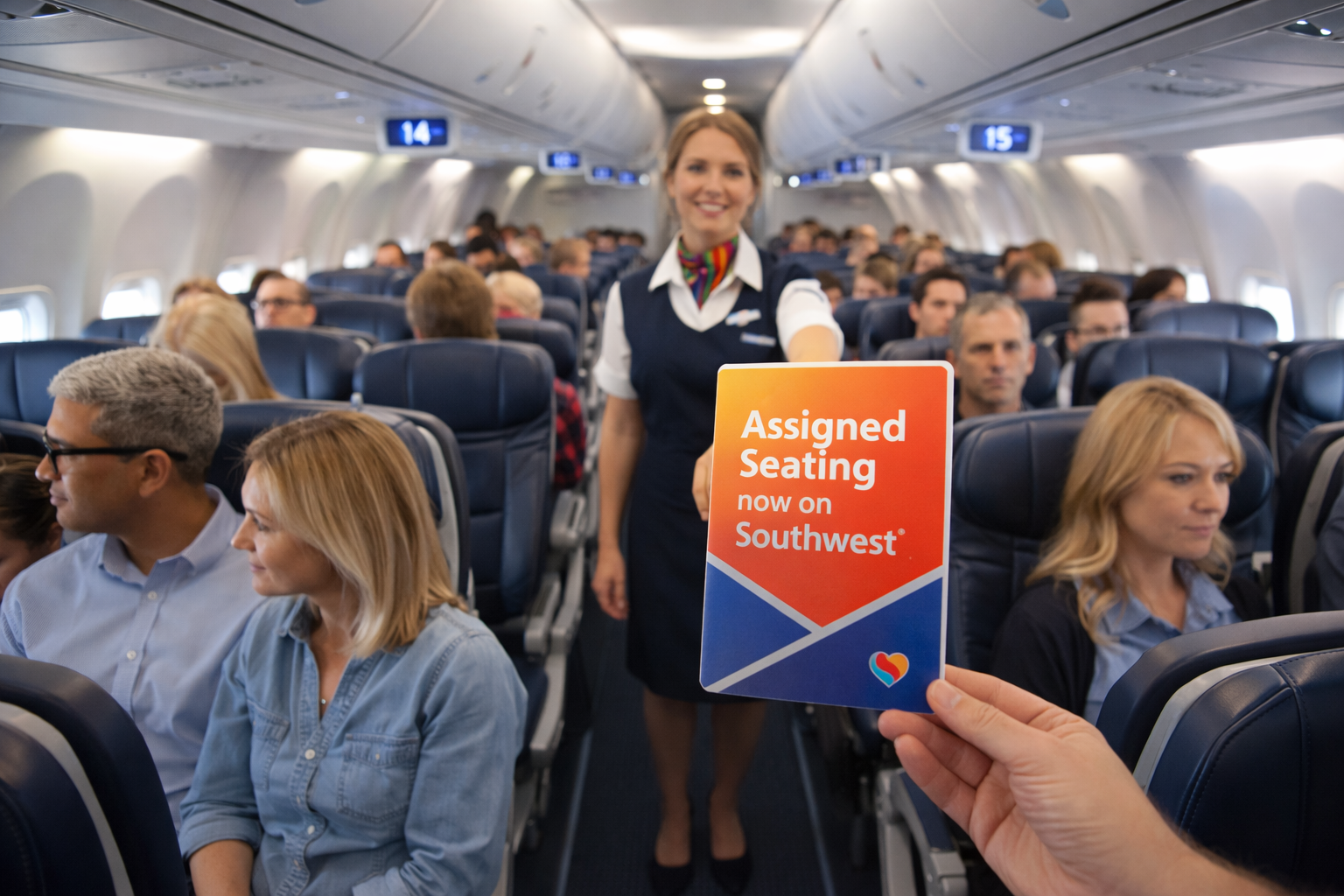
Southwest Airlines has launched one of the biggest changes in its operating model, officially ending open seating and moving to assigned seats for the first time in more than five decades. As of Tuesday, passengers flying the Dallas-based carrier now receive a specific seat before boarding, aligning Southwest more closely with competitors such as American, Delta, and United.
The airline announced the shift in July 2024, saying customers increasingly wanted more control over where they sit. Under the new approach, travelers can choose from Standard, Preferred, and Extra Legroom seats, with prices for advance selection generally ranging from $15 to $40 depending on the route and seat location. Customers who opt not to select a seat will receive one automatically at check-in.
Tony Roach, Southwest’s executive vice president of customer and brand, said the move removes the uncertainty that came with wondering where a passenger might end up in the cabin. Extra Legroom seating, featuring new RECARO R2 seats with additional space, is part of a broader premium offering rolling out across the fleet beginning in 2026.
The transition also brings a new boarding process. The familiar A, B, and C groups with numbered positions are being retired, and the metal stanchions that once marked boarding spots are being removed from airports over the next 60 days. In their place, Southwest now uses Groups 1 through 8, displayed on digital gate screens. Boarding order is determined by fare type, seat location, upgrades, and loyalty status.
Groups 1 and 2 include A-List Preferred members, Choice Extra fares, and customers who purchase or upgrade to Extra Legroom seats. Groups 3 through 5 include A-List and Choice Preferred fares, along with some Rapid Rewards credit cardholders. Groups 6 through 8 generally consist of Choice and Basic fare passengers who do not qualify for earlier boarding.
Basic fare customers receive randomly assigned seats at check-in. Southwest says it will try to seat children under 13 next to a parent or guardian when possible, but if that cannot be done, families may be offered rebooking on a later flight. The airline recommends purchasing a regular economy ticket to reduce that risk.
Another major update affects Southwest’s policy for customers of size. Passengers who need more space must now purchase an additional seat in advance. A refund is available only if there is an empty seat on the flight and the request is made within 90 days after travel. If the flight is full, no refund is issued. Previously, customers could request an extra seat at no charge if available. Southwest says the updated policy still offers more flexibility than many other U.S. airlines.
Reaction among travelers has been mixed. Some longtime loyalists say open seating was part of what made Southwest stand out and are frustrated by added fees, especially following the airline’s move away from free checked bags. Others welcome the predictability, believing assigned seats will make boarding smoother and reduce stress.
Southwest says the changes are designed to modernize the experience, meet evolving customer preferences, and support the airline’s financial goals, even as many passengers adjust to the end of an era.
This image is the property of The New Dispatch LLC and is not licenseable for external use without explicit written permission.