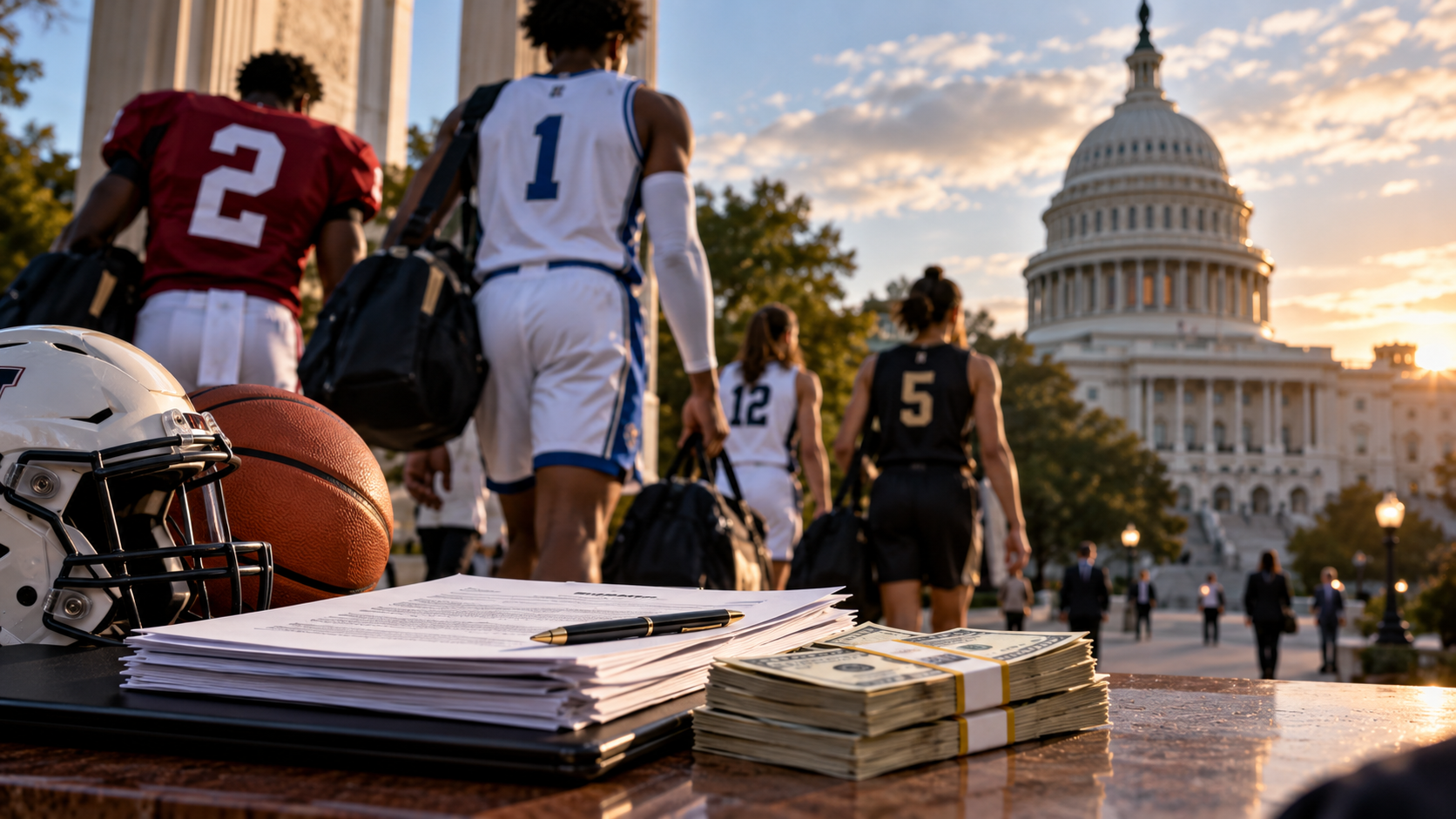
College athletes could face major changes in how they are paid and move between schools under legislation approved by the Senate on Monday(9/28/26). Senators voted 77-22 for the Protect College Sports Act after years of discussion over the changing financial structure of college athletics.
The proposal covers athlete earnings, eligibility, transfers, healthcare and the financial relationship between players and their schools. Much of it is an attempt to establish federal requirements in areas that have changed quickly because of court decisions and new forms of athlete compensation.
Money is one of the biggest pieces. For the 2026-27 academic year, schools would be able to provide athletes with about $21.6 million from athletic revenue. Another fund could provide additional money to players who remain at their schools.
The transfer system would become more restrictive. Players would normally be allowed to change schools once and continue competing without sitting out, although exceptions could apply. The legislation would generally give athletes five years in which to compete.
Other sections address medical care, scholarships and the fees agents can collect from athletes. Athletic departments would also have requirements meant to discourage them from cutting smaller programs as more money is directed toward athletes and other expenses.
Sen. Ted Cruz of Texas sponsored the legislation and has argued that the current financial direction of college athletics cannot continue indefinitely. He has pointed to rising costs, repeated transfers and legal disputes as problems Congress is trying to address.
The NCAA supports the legislation. The Big Ten and SEC have backed it as well, and the White House has expressed support for the proposal.
The large Senate majority did not erase concerns about what the measure could mean for athletes. Some Democratic senators say players could give up too much power in exchange for the stability the legislation is supposed to provide.
Sen. Cory Booker, D-N.J., has focused much of his criticism on the courts. Athletes have successfully used lawsuits to challenge restrictions placed on them, and Booker argues the legislation could make that route more difficult in the future. He has also questioned whether players have had enough influence over a system that would directly affect their rights.
Sen. Chris Murphy, D-Conn., has criticized the way the proposal handles spending. His argument is that the legislation puts boundaries around payments to players without taking the same approach toward other large amounts of money moving through college athletic programs.
Civil rights and labor organizations have raised separate objections. The Congressional Black Caucus has said Black athletes and others connected to college sports were not adequately represented in developing the proposal. Questions about athletes eventually gaining employee status or negotiating together are not settled by the bill.
Sen. Maria Cantwell, D-Wash., helped develop the measure and has defended what players would receive under it. She has pointed to the money available to athletes, medical protections and provisions intended to keep schools from reducing athletic opportunities. The proposal also gives athletes a place on a commission that could examine unresolved issues in the future.
The Senate vote is only one part of the process required for the proposal to become law. The House still has to consider the measure, but representatives are currently away from regular legislative work during the election period.
That creates a timing problem for supporters. Congress has only the remaining part of its current term to finish work on the proposal. If that does not happen, passage by the Senate this week will not carry over into the next Congress and the legislative process would need to begin again.
This image is the property of The New Dispatch LLC and is not licenseable for external use without explicit written permission.