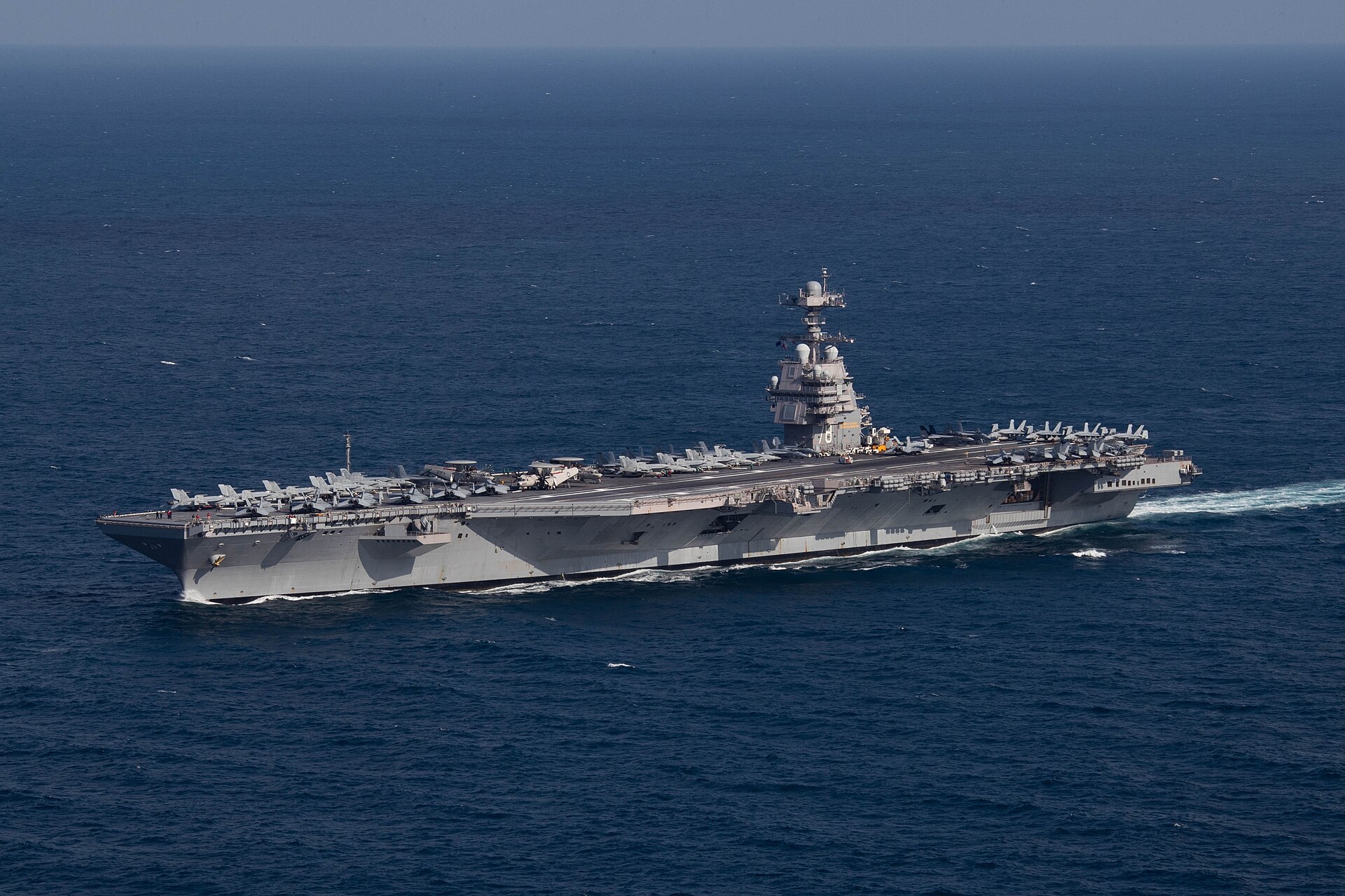
The United States is preparing to deploy the USS Gerald R. Ford, the Navy’s largest aircraft carrier, to the Middle East, where it will join the USS Abraham Lincoln and its accompanying strike group. The move places two carrier groups in the region at a time of mounting tension with Iran and ongoing diplomatic efforts aimed at addressing Tehran’s nuclear program.
According to officials familiar with the plans, the Ford will leave the Caribbean, where it had been stationed for months as part of Operation Southern Spear, and head toward the U.S. Central Command area. The carrier is expected to take several weeks to arrive. Once in position, it will bring a large air wing that includes multiple squadrons of F/A-18 fighter jets and electronic warfare aircraft, adding to the military presence already established in nearby waters.
President Donald Trump has suggested that the deployment is tied to ongoing negotiations with Iran. Speaking to reporters, he said the additional carrier group would be in place “in case we don’t make a deal,” indicating that the move is meant to increase pressure while talks continue. The United States and Iran have held indirect discussions through intermediaries, including Oman, but progress has been uneven. Trump has warned that failure to reach an agreement could lead to severe consequences, while also expressing optimism that an understanding could be reached within weeks.
The decision to send the Ford comes shortly after another round of potential negotiations failed to materialize. Iranian officials have been traveling in the region, meeting with intermediaries and exchanging messages with U.S. representatives. At the same time, Gulf Arab nations have cautioned that any military confrontation could ignite a broader conflict in a region already strained by the aftermath of the Israel-Hamas war in Gaza.
The Ford’s redeployment marks a rapid shift in mission. In October, it had been operating in the Mediterranean before being redirected to the Caribbean. There, it was part of a large U.S. naval presence linked to counter-narcotics operations and later supported the mission that led to the capture of Venezuelan leader Nicolás Maduro. The new orders will likely extend the ship’s deployment well beyond its original timeline. The crew, which set out in late June 2025, now faces a longer period at sea, potentially stretching into the spring.
While the White House has not provided detailed comments on the move, the build-up in the region has been visible for weeks. Fighter squadrons have returned to nearby bases, and additional air defense systems have been positioned in key locations, including at al-Udeid Air Base in Qatar. These steps suggest preparations for a range of possibilities, from continued diplomacy to a potential military confrontation.
Inside Iran, the government faces internal strain following a deadly crackdown on protests. Families are now holding traditional 40-day mourning ceremonies for those killed. Videos circulating online show gatherings at cemeteries and public spaces, where people carry portraits of the dead and sing patriotic songs. These events add to the challenges facing the Iranian leadership as it navigates external pressure and domestic unrest.
The deployment of the Ford alongside the Lincoln places considerable U.S. naval power within reach of the Persian Gulf. As diplomatic efforts continue, the increased presence is likely intended to support negotiations while also preparing for a scenario in which talks fail to produce results.
Image is in the public domain and was created by Mass Communication Specialist 2nd Class Jackson Adkins.




_underway_in_the_Atlantic_Ocean_on_9_October_2022_(221009-N-TL968-1248).JPG)