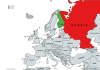
Public reporting and expert analysis indicate that detections of HIV among Russian military personnel rose sharply after Russia launched its full-scale invasion of Ukraine in February 2022, raising questions about recruitment policy, military healthcare capacity, and the long-term public-health consequences of prolonged war.
According to an analysis published by the Carnegie Endowment for International Peace, figures discussed by Russian military doctors and referenced in official contexts show that newly detected HIV cases within the armed forces increased roughly fivefold between the first quarter of 2022 and the autumn of that year. By the end of 2022, detections were estimated to be about thirteen times higher than pre-war levels. The same analysis describes a peak of more than forty times the pre-war baseline in early 2023, before falling back to approximately twenty times the baseline by the end of 2023. These shifts are sometimes summarized as a two-thousand-percent increase, a formulation that reflects the same twentyfold rise rather than a separate set of figures.
Experts caution that these statistics refer to detections rather than confirmed new infections acquired during military service. Detection rates can rise when recruitment expands, testing practices change, or previously undiagnosed cases are identified. Russia does not publish detailed or regularly updated military health statistics, making independent verification difficult.
A central factor cited by analysts is the wartime expansion of recruitment pools. Beginning in 2022, Russia increasingly drew on men from penal colonies, initially through private military formations and later through Defense Ministry–affiliated units. Investigations by international and Russian independent media have documented that many recruits were offered military contracts linked to sentence commutation or eventual pardons.
Public-health researchers have long noted that HIV prevalence in Russian prisons is significantly higher than in the general population. Estimates cited in academic literature and harm-reduction reporting have placed prevalence in some prison populations in the range of ten to fifteen percent, although rates vary by region and year. Analysts say that incorporating large numbers of people from such populations would predictably increase the number of HIV-positive individuals entering the armed forces, even without new transmission occurring during service.
Ukrainian officials have also commented publicly on the issue. In statements to media outlets, Ukrainian authorities said that screenings of captured Russian fighters from certain units, particularly those believed to include former prisoners, showed HIV positivity rates approaching twenty percent. Public-health specialists emphasize that these figures reflect estimates drawn from specific cohorts and should not be generalized to the Russian military as a whole.
At the same time, experts say wartime conditions can indirectly worsen HIV outcomes and contribute to further spread through established transmission routes. HIV is transmitted through unprotected sexual contact, shared needles, and from mother to child, not through casual contact, shared living spaces, or general battlefield unsanitary conditions. However, armed conflict can disrupt healthcare systems in ways that amplify existing risks.
The Carnegie analysis notes that rapid mobilization and constant redeployment strained military medical services that previously relied on routine screening and stable access to antiretroviral therapy. Interruptions in treatment do not cause HIV to spread on their own, but they can raise viral loads in infected individuals, increasing the likelihood of transmission during sexual contact or needle sharing. Limited access to condoms, confidential testing, and harm-reduction services during wartime can further increase risk where such behaviors occur.
Public-health research, including commentary published by journals such as The Lancet, has documented in other conflict settings how wars and mass displacement can undermine HIV control by weakening healthcare infrastructure and interrupting treatment continuity. Specialists stress that these effects tend to amplify existing epidemics rather than create new ones.
The military trend is unfolding against the backdrop of Russia’s broader HIV epidemic, one of the largest in Europe. Official registries have long reported more than one million people living with diagnosed HIV, while independent estimates that account for undiagnosed cases place the total higher, potentially approaching one and a half million. Analysts argue that the armed forces inevitably reflect the health profile of the society from which they recruit, particularly during large-scale mobilization.
Civil-society organizations that historically supported HIV prevention and treatment have faced increasing restrictions. In 2025, Russian authorities designated the Elton John AIDS Foundation as an undesirable organization, effectively banning its activities in the country. Public-health advocates warned that the move further limited independent capacity to provide HIV-related services and outreach.
Medical experts emphasize that with consistent treatment, people living with HIV can remain healthy and fully capable of work, including military service. They also warn that large numbers of untreated or poorly managed cases could increase long-term healthcare costs and complicate reintegration when veterans return to civilian life. As the war continues, specialists say the rise in HIV detections highlights how recruitment choices and healthcare disruptions can produce lasting public-health consequences that extend well beyond the battlefield.
This image is the property of The New Dispatch LLC and is not licenseable for external use without explicit written permission.