More than two weeks of unrest across Iran have resulted in a mounting death toll, widespread arrests, and growing international concern, as authorities intensify their response to nationwide protests that began in late December. Human rights groups say at least 2,500 people have been killed since demonstrations erupted over economic hardship and rapidly expanded into open opposition to the government.
The Human Rights Activists News Agency, a US based organization that tracks developments inside Iran, reported that it has confirmed 2,571 deaths and is reviewing hundreds of additional reports. Those figures include thousands of protesters, more than a hundred individuals affiliated with government forces, and several children. The Iranian government has not released official civilian casualty numbers, and independent verification remains difficult due to an ongoing internet shutdown.
The blackout, now stretching for days, has cut off most digital communication inside the country. Monitoring organizations say mobile data, fixed internet service, and messaging platforms remain largely inaccessible, limiting the ability of families, journalists, and activists to document events or locate missing relatives. Rights groups warn that the communications cutoff has made it harder to assess the full scale of violence.
Videos that have surfaced despite the blackout appear to show large numbers of bodies at forensic facilities near Tehran. International news outlets have verified some footage, though the total number of casualties shown cannot be confirmed. Doctors and hospital staff speaking anonymously to media outside Iran have described medical centers overwhelmed by injured civilians and shortages of supplies.
In Washington, President Donald Trump voiced support for protesters and warned Iranian authorities that further violence would bring consequences. In a series of public statements, Trump urged demonstrators to continue pressing for change and suggested that American assistance could follow, without offering details. The State Department has advised all US citizens to leave Iran, citing security risks.
The administration has already announced a 25 percent tariff on countries that continue doing business with Iran, and officials say additional steps are under review. These include expanded sanctions targeting senior officials and key economic sectors. Members of Trump’s national security team have held multiple meetings to evaluate options, while Iranian leaders have threatened retaliation if foreign powers intervene.
Inside Iran, officials have framed the protests as the work of foreign backed agitators and accused demonstrators of undermining national security. The head of Iran’s judiciary has called for swift prosecutions, raising alarm among international observers who fear expedited trials and executions. Some detainees have already reportedly received death sentences under charges that carry the harshest penalties.
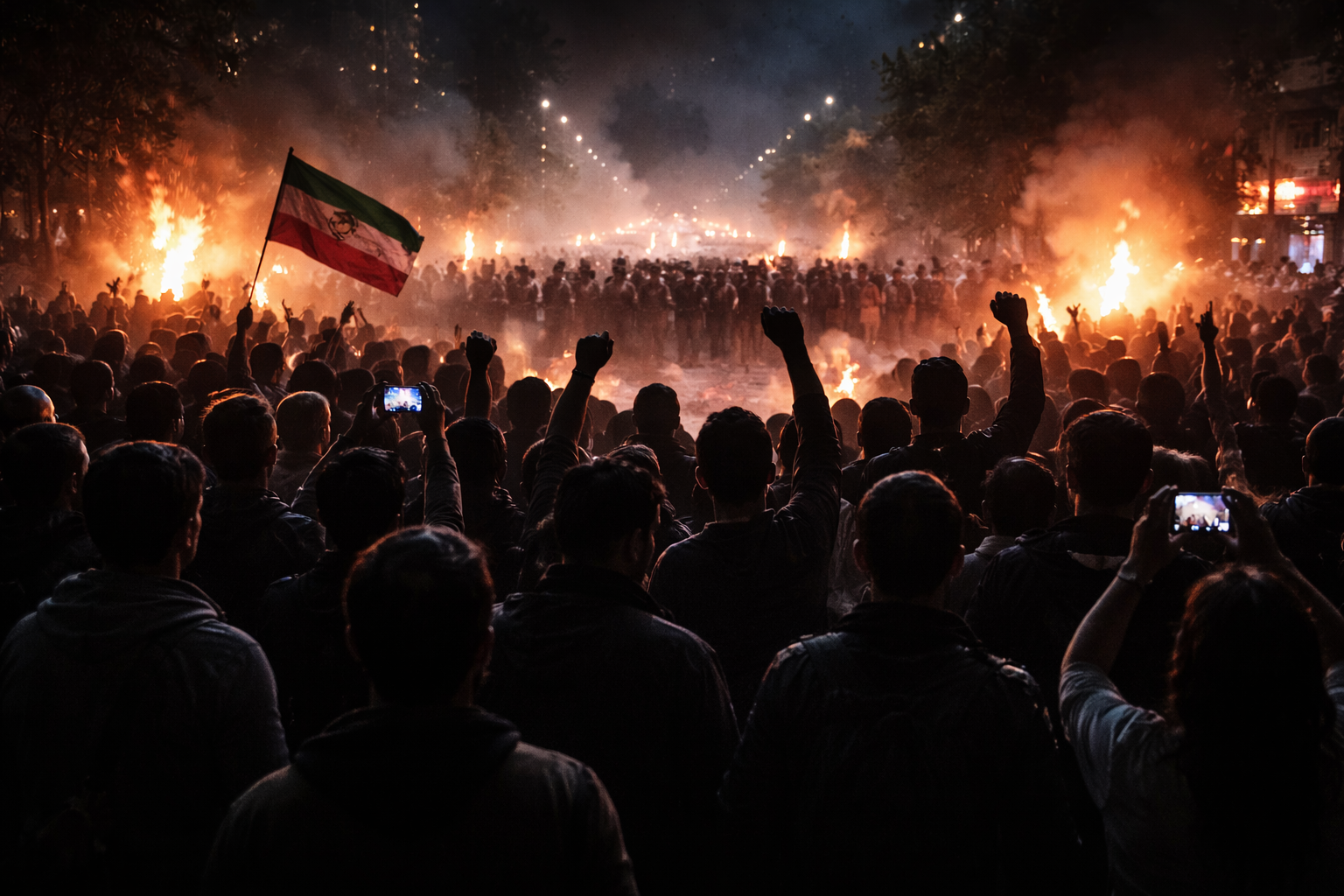
Despite the risks, demonstrations continue in cities across all 31 provinces. Protesters have called for political change and an end to decades of clerical rule, with chants and rallies persisting even amid heavy security presence. Exiled opposition figures have urged members of Iran’s military to refuse orders to suppress civilians.
The United Nations and several Western governments have called on Iran to halt the violence, restore internet access, and allow independent investigations. Human rights advocates argue that preserving evidence now will be essential for future accountability, as the situation inside Iran remains volatile and largely hidden from view.
This image is the property of The New Dispatch LLC and is not licenseable for external use without explicit written permission.