Lebanon and Israel took part in an unusual round of discussions this week, bringing civilian representatives into a forum that has long been dominated by military delegations. The talks, convened under US supervision in the border town of Naqoura, marked a rare face-to-face encounter between the two countries after decades without direct civilian engagement. Although the session unfolded within the framework of the 2024 ceasefire, it reflected widening diplomatic efforts amid growing concern that clashes along the frontier could intensify.
Lebanese Prime Minister Nawaf Salam described the initiative as an attempt to calm the situation rather than launch any political process with Israel. He stressed that Beirut’s participation remains tied to achieving an end to ongoing confrontations, securing the release of Lebanese detainees, and ensuring Israel withdraws from areas Lebanon considers occupied. Salam also repeated that any broader relationship between the two states must follow the principles of the 2002 Arab Peace Initiative, which envisions regional recognition of Israel in exchange for withdrawal from territories captured in 1967. Lebanon, he said, is not pursuing a separate bargain.
The introduction of civilian envoys was presented by the committee as a step intended to widen communication channels beyond the military realm. Participants emphasized that more inclusive representation could help stabilise a border that has long been prone to eruptions of violence. The meeting followed a series of Israeli air raids on Lebanese territory, which Beirut interprets as signs of growing pressure.
Simon Karam, a lawyer and former Lebanese ambassador to Washington, headed the Lebanese civilian contingent. His appointment stirred debate at home, with several political groups arguing that his presence could be misused to promote an agenda not shared domestically. Salam rejected those accusations, saying the choice was coordinated across state institutions and should not be construed as a gateway to political rapprochement.
Israel’s leadership portrayed the gathering in a more upbeat light. Prime Minister Benjamin Netanyahu said the meeting unfolded positively and that both sides expressed willingness to examine future economic ideas. Israeli officials, however, insisted that any progress would require Hezbollah to give up its weapons, framing this as a precondition for lasting calm. The Lebanese government, by contrast, continues to argue that Hezbollah must ultimately be brought under state authority but that this process cannot be dictated from outside.
Hezbollah itself has dismissed the expanded talks as an attempt to corner the group. Its leaders maintain that they reserve the right to respond to Israeli strikes, particularly after recent assassinations of senior figures. The exchange of accusations over ceasefire breaches—Israel citing Hezbollah activities, Lebanon pointing to Israeli bombardment and troop positions—has heightened fears that the truce could unravel.
Salam said Beirut is willing to let the committee verify claims regarding Hezbollah’s arsenal and even consider a role for French or US personnel in that monitoring effort. He warned, however, that Lebanon will not tolerate decisions that push the country toward a new conflict. According to officials familiar with the talks, another session is planned later this month, offering a chance to sustain dialogue at a moment when trust remains fragile.
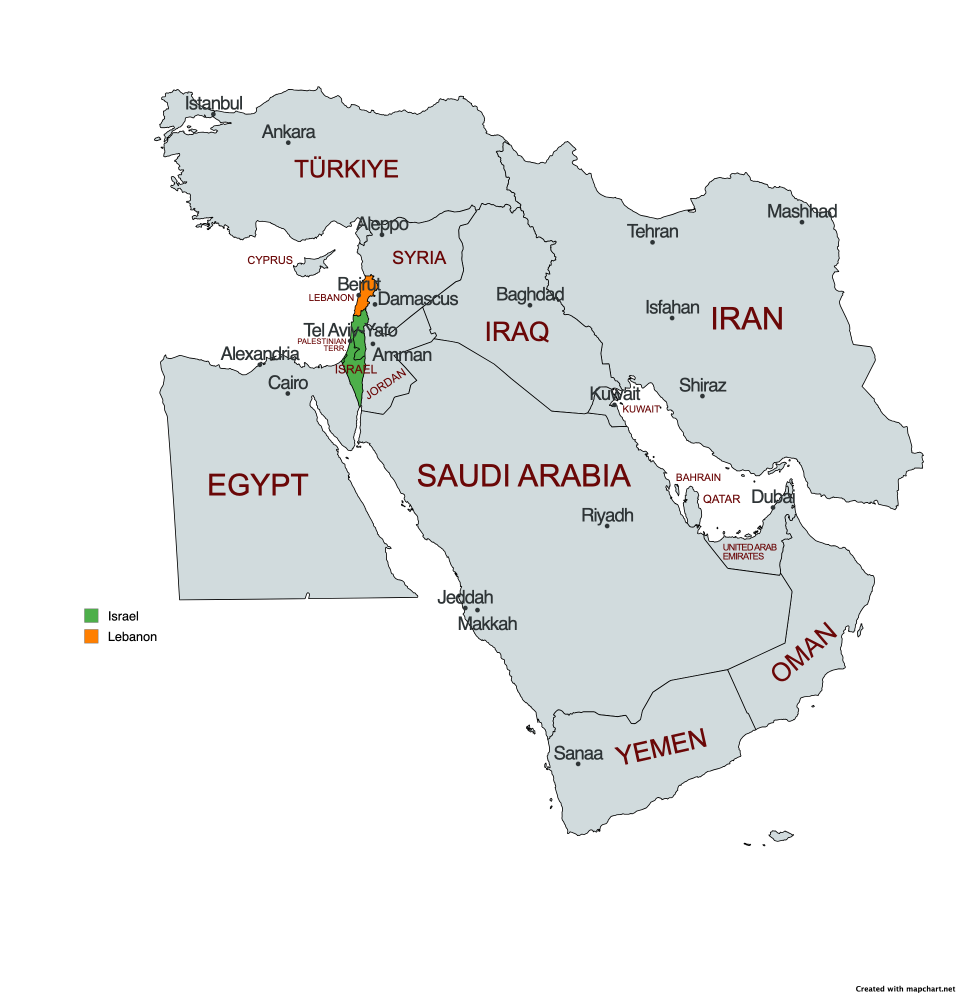
Green = USA
Lebanon = Orange
Image is licensed under the Creative Commons Attribution-Share Alike 4.0 International license and was created using MapChart (https://mapchart.net).