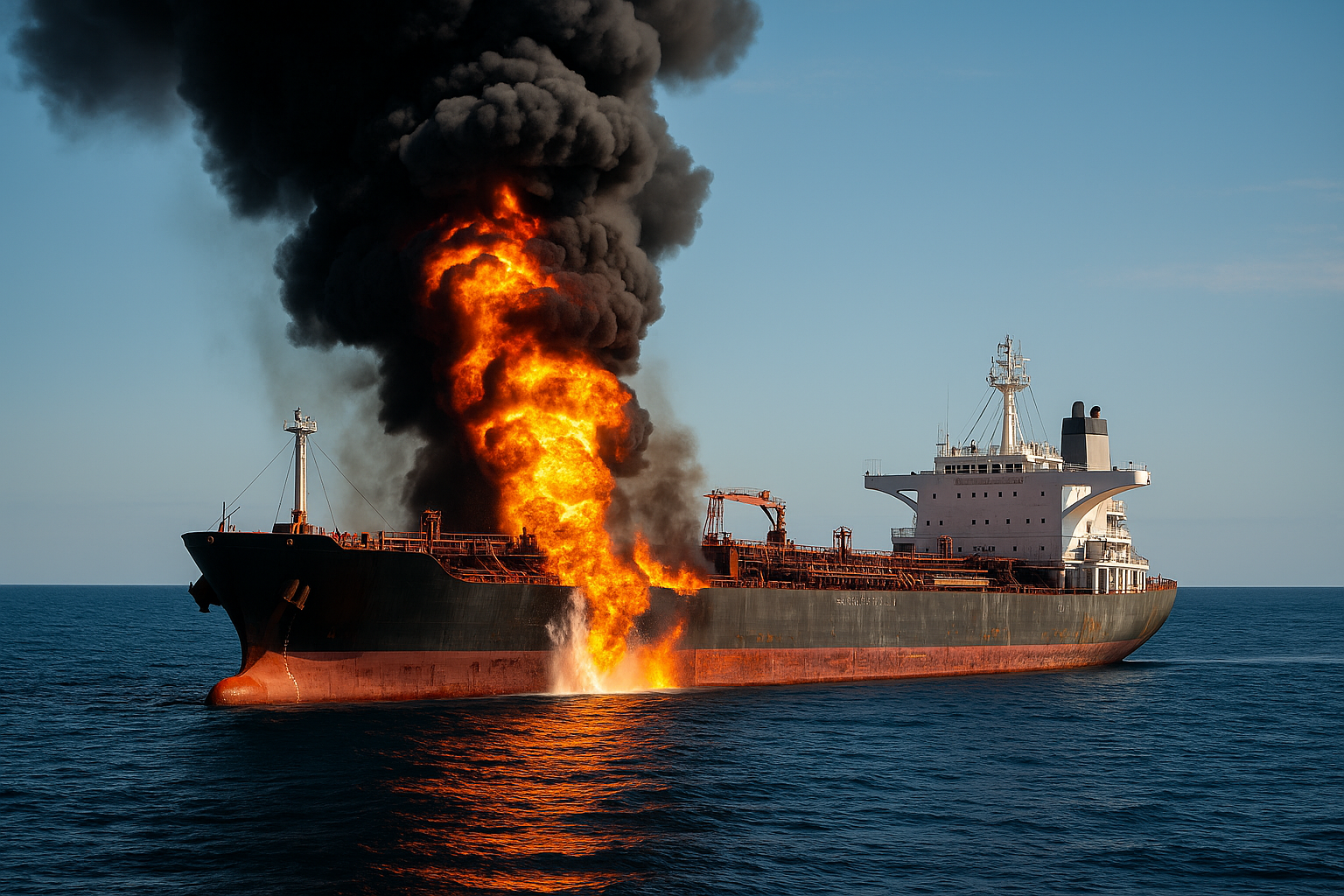
Ukraine’s naval drone program expanded its reach this week as two tankers connected to Russia’s clandestine oil-shipping network were struck in the Black Sea. The vessels, Kairos and Virat, were traveling near Turkey’s coastline when explosive-laden drones slammed into their hulls, setting off fierce fires and forcing emergency responses from Turkish authorities. Both ships, registered under the Gambian flag and listed under Western sanctions, were en route to the Russian port of Novorossiysk.
Video released by Ukrainian security officials shows fast-moving surface drones carving through open water before colliding with the tankers. The footage captures bright blasts erupting on impact, followed by plumes of dark smoke drifting over the sea. Ukrainian officials say the strikes were carried out by Sea Baby drones—homegrown naval systems used increasingly to pressure Russia’s military and economic infrastructure.
Turkey confirmed that its rescue teams assisted both tankers. The Kairos suffered extensive fire inside enclosed sections of the vessel, prompting the evacuation of all 25 crew members. The Virat did not request evacuation, though authorities earlier reported an engine-room fire tied to the attack. Turkey’s transport ministry said the incidents took place inside the country’s exclusive economic zone and that Ankara was coordinating with partners to maintain navigational safety.
The two tankers belong to a wider group of aging oil carriers informally known as Russia’s “shadow fleet.” This network grew rapidly after the 2022 invasion of Ukraine as Moscow sought ways to keep selling crude despite Western sanctions. Many of the ships operate with opaque ownership structures, have switched national registries multiple times, and rely on low-cost insurers or none at all. Researchers tracking sanctions evasion have long warned that these vessels move large volumes of Russian oil through high-risk routes with minimal oversight.
The strikes also coincided with a separate attack on infrastructure belonging to the Caspian Pipeline Consortium (CPC). The CPC, which transports Kazakh oil through Russia to the Black Sea, stopped loading operations after a drone damaged one of its mooring points. Kazakhstan denounced the strike, saying it jeopardized energy deliveries and strained ties with Kyiv. The attack was the third against facilities used by the consortium.
Russia condemned both sets of incidents, arguing that they endanger global shipping and raise tensions across the region. Moscow said it plans to notify international maritime bodies about the risks posed by Ukrainian drone activity.
Meanwhile, Ukraine continues diplomatic efforts alongside its military campaign. President Volodymyr Zelensky announced that security chief Rustem Umerov will lead a delegation to the United States for talks on a potential path to ending the war. The visit comes after the resignation of Zelensky’s former chief of staff, Andriy Yermak, who stepped aside following an anti-corruption inquiry.
The twin pressures of drone warfare at sea and renewed diplomatic outreach highlight the evolving dimensions of a conflict that now stretches from trenches on land to busy international shipping corridors.
This image is the property of The New Dispatch LLC and is not licenseable for external use without explicit written permission.