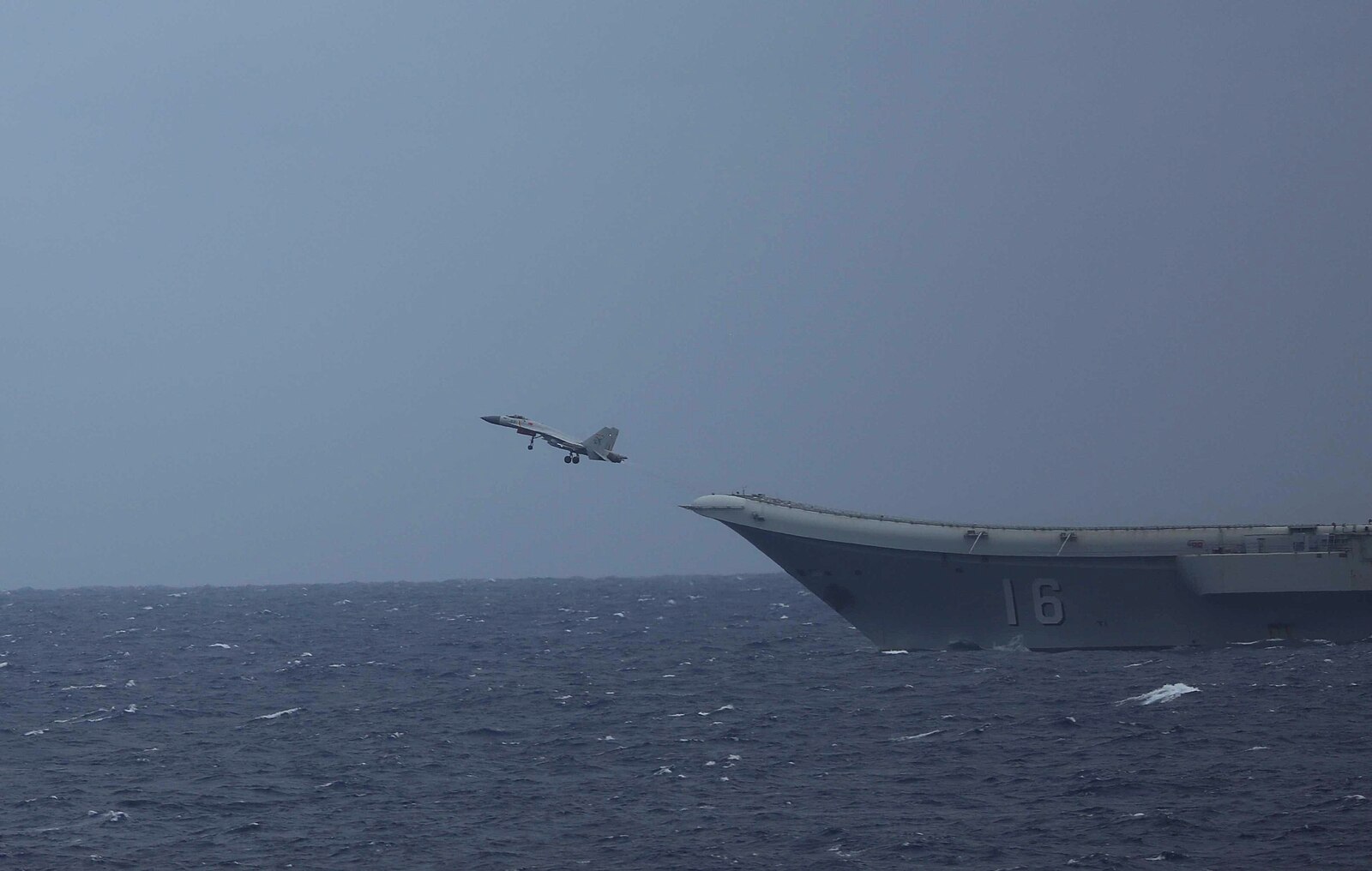
On December 6, 2025, two separate incidents occurred over international waters southeast of Okinawa in which fighter aircraft from the Chinese aircraft carrier Liaoning reportedly locked their fire-control radar onto Japanese Air Self-Defense Force (ASDF) F-15 jets. Tokyo described the actions as dangerous and unacceptable, warning that such conduct heightens the risk of miscalculation between the two countries.
According to Japan’s Ministry of Defense, a Chinese J-15 fighter intermittently illuminated a Japanese F-15 with its fire-control radar between approximately 4:32 p.m. and 4:35 p.m., and again between about 6:37 p.m. and 7:08 p.m. The Japanese aircraft, which had scrambled to monitor the Liaoning’s flight-training operations in the Pacific, reportedly maintained safe distances throughout the encounter. No shots were fired and no violations of Japanese airspace were recorded.
In the early hours of December 7, Defense Minister Minoru Kihara held a press conference in Tokyo, calling the radar lock-ons “extremely regrettable” and stressing that they exceeded what is necessary for safe aircraft operations. Later that morning, the Japanese government summoned China’s ambassador and lodged a formal protest, demanding measures to prevent similar incidents.
China rejected Japan’s claims. A spokesperson for the People’s Liberation Army Navy stated that the Liaoning carrier group had been conducting routine training in international waters and accused Japanese fighter jets of repeatedly approaching the formation, disrupting drills, and threatening flight safety. Chinese officials denied that any radar targeting occurred and criticized Tokyo’s statements as misleading.
Japan’s defense ministry reported that during the training period the carrier conducted roughly 100 takeoffs and landings of its shipborne aircraft, underscoring the scale of China’s operations near Japanese territory. The events have fueled renewed concern among regional partners. Australia, during ministerial meetings with Japan on December 7, urged restraint and emphasized the importance of avoiding escalation.
The incident comes at a time of growing friction between Tokyo and Beijing. Relations had already been strained following recent comments by Prime Minister Sanae Takaichi regarding Japan’s possible response to a Taiwan-related contingency, remarks that China denounced as provocative. Beijing has since intensified criticism of Japan’s security posture and increased naval and air activity in the western Pacific.
While no damage or injuries occurred, the radar-lock episodes highlight the fragility of the security environment in East Asia, where frequent military operations in close proximity leave little margin for error. Both governments face mounting pressure from the international community to manage tensions responsibly and to maintain open channels of communication to prevent further escalation.
Image is licensed under the Creative Commons Attribution 4.0 International license and was created by 日本防衛省・統合幕僚監部.