Tensions across the Middle East intensified after rockets were fired toward the U.S. Embassy in Baghdad inside the heavily fortified Green Zone, as fighting linked to the U.S.-Israeli campaign against Iran continues to ripple across the region. Iraqi authorities condemned the attack and launched an investigation to determine who was responsible.
According to Iraqi security officials, several rockets were launched late Saturday evening toward the diplomatic compound. Sirens warning of incoming fire echoed across central Baghdad as defense systems activated. One projectile was intercepted by a counter-rocket system, while others fell nearby. Early reports suggested that a rocket struck a helicopter landing area inside the embassy grounds, though there were no confirmed casualties among American personnel.
Iraqi Prime Minister Mohammed Shia al-Sudani described the incident as a “terrorist act” and directed security forces to pursue those behind it. In a statement issued by his office, he said the groups responsible were acting outside the law and did not represent the will of the Iraqi people. Iraqi officials also warned that attacks on diplomatic missions threaten the country’s sovereignty and stability.
The strike marked the first time rockets had landed in the Green Zone since the latest phase of fighting between the United States, Israel, and Iran began. Although the fortified district has often been targeted during periods of tension, attacks had decreased over the past two years.
Responsibility for the rocket fire has not yet been confirmed. However, Iran-aligned militias operating in Iraq have carried out dozens of attacks on U.S. military facilities and energy infrastructure since hostilities expanded across the region. Many of these groups operate under the umbrella of the Popular Mobilisation Forces, a network of mostly Shiite armed factions that were formed to fight ISIS but later became integrated into Iraq’s security structure. Despite their official status, some factions maintain close ties with Iran and have previously conducted independent operations.
Violence has also spread beyond Baghdad. Iraqi authorities reported that a fighter from the Popular Mobilisation Forces was killed following air strikes on bases belonging to the group in Nineveh province in northern Iraq. A militia official claimed the strike may have been carried out by the United States, though no confirmation has been issued by Washington.
Meanwhile, the Islamic Revolutionary Guard Corps announced that it had targeted what it described as separatist groups in the Kurdish region of northern Iraq. Iranian Kurdish opposition factions operate camps and rear bases in the area, and Iranian officials warned they would respond forcefully if those groups launched attacks against Iranian territory.
Residents in the Kurdish regional capital of Erbil also reported hearing explosions as air defense systems attempted to intercept drones. The city hosts a large American consulate complex and has repeatedly been the focus of drone activity since the regional confrontation intensified.
Iraq has long found itself caught between the interests of Washington and Tehran. Iraqi leaders have repeatedly stated they do not want their country to become a battlefield for outside powers. Nevertheless, the growing number of strikes, drone interceptions, and militia activity shows how easily regional tensions can spill across Iraq’s borders.
Iranian President Masoud Pezeshkian said his country would avoid attacking neighboring states unless assaults against Iran were launched from their territory. Even with that message, the wave of rocket launches, drone sightings, and retaliatory strikes has fueled concerns that Iraq could once again become a front line in a wider regional confrontation.
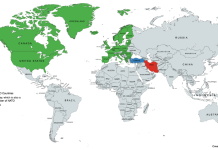
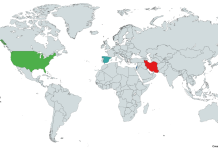
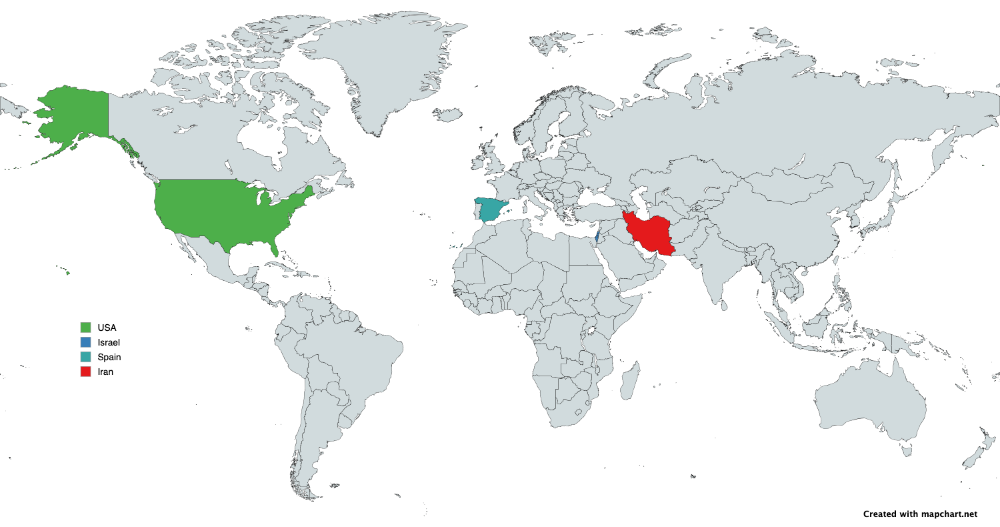
USA = Green
Israel = Blue
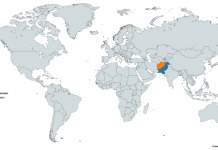
Iraq = Orange
Iran = Red
Image is licensed under the Creative Commons Attribution-Share Alike 4.0 International license and was created using MapChart (https://mapchart.net).