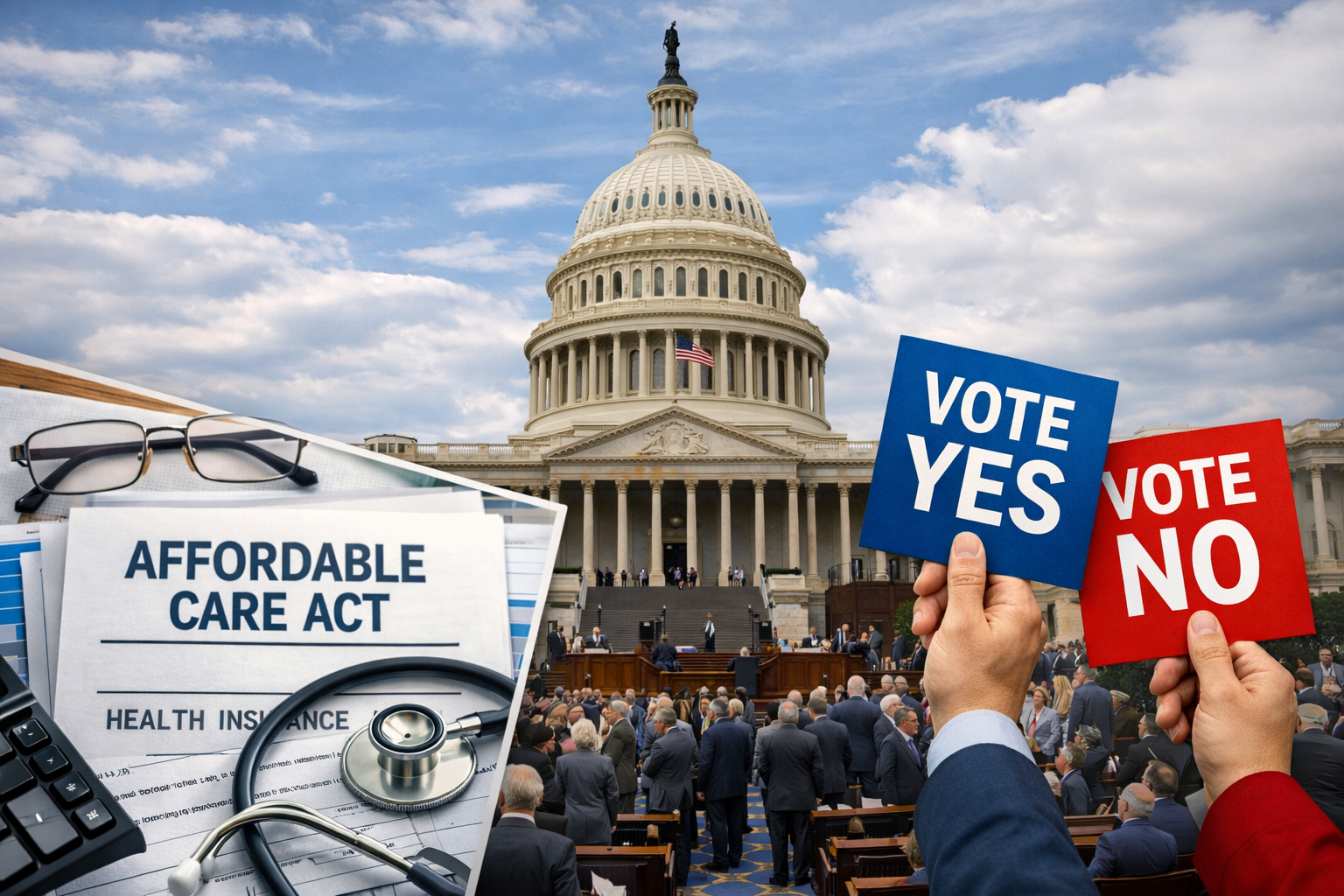
The U.S. House of Representatives on Thursday approved legislation that would extend enhanced Affordable Care Act premium subsidies for three years, sending the bill forward amid deep uncertainty about its prospects in the Senate. The measure passed by a 230–196 vote, with 17 Republicans joining Democrats despite opposition from GOP leadership.
The subsidies, which expired at the end of 2025, were expanded during the COVID-19 pandemic to increase financial assistance for people already eligible for help and to extend eligibility to additional households. Without congressional action, millions of Americans enrolled through the ACA marketplaces are facing sharply higher monthly premiums in 2026.
House Democratic leaders framed the vote as a bipartisan effort aimed at easing household expenses. House Minority Leader Hakeem Jeffries said the coalition supporting the bill reflected growing concern about health care affordability. Senate Minority Leader Chuck Schumer, appearing alongside Jeffries, expressed hope that additional Republicans would back the extension as negotiations continue.
Momentum in the House followed a procedural vote the previous night, when nine Republicans crossed party lines to advance the bill. That step cleared the way for final passage and added pressure on Senate negotiators, even as Republican leaders in the upper chamber signaled resistance. Senate Majority Leader John Thune said there was little support for a straight extension, pointing instead to bipartisan talks focused on possible changes to the program.
Those discussions include proposals to tighten income eligibility, address fraud, and consider the role of Flexible Savings Accounts. Lawmakers involved in the talks said there was agreement on the need to curb abuses such as “phantom” marketplace accounts. Senator Jeanne Shaheen of New Hampshire said draft language could emerge soon, though details remain unresolved.
Another point of contention is abortion policy. Some conservatives want to add explicit Hyde Amendment language to ensure federal funds are not used for abortion services. Several moderate Republicans have acknowledged that the ACA already operates under Hyde restrictions, but Democrats have opposed efforts to reopen the issue in the subsidy extension.
The Senate last month rejected a similar three-year extension after it failed to reach the 60-vote threshold required to advance. Four Republicans joined Democrats in that vote, but not enough to overcome opposition within the caucus. Even so, some lawmakers from both parties say a compromise could still be reached if the scope or duration of the extension is adjusted.
According to the nonpartisan Congressional Budget Office, extending the subsidies would add about $80.6 billion to the federal deficit over ten years. The agency estimates that insurance coverage would rise modestly in 2026 before climbing in subsequent years, driven largely by increased enrollment in ACA marketplaces, partially offset by declines in employer-based and off-marketplace coverage.
President Donald Trump has voiced opposition to extending the subsidies, arguing that broader changes to the health care system should move forward instead. For now, the House vote places renewed focus on Senate negotiations, where lawmakers face pressure from constituents confronting higher premiums and from party leaders wary of the fiscal and political costs.
This image is the property of The New Dispatch LLC and is not licenseable for external use without explicit written permission.