On December 20, 2025, Colombian authorities carried out a large multinational maritime counter-narcotics operation that resulted in the seizure of 27 tonnes of cocaine across the Pacific and Atlantic Oceans, according to information later shared publicly by Gustavo Petro. The combined seizures rank among the largest maritime drug interdictions announced by Colombia in recent years and highlight the continued scale of cocaine trafficking along intercontinental sea routes.
President Petro disclosed details of the operation on Sunday, December 21, stating that Colombian forces, led by the Colombian Navy, seized nine tonnes of cocaine from multiple vessels in the Pacific Ocean. A separate operation in the Atlantic Ocean, conducted near Spain’s Canary Islands, resulted in the confiscation of an additional 18 tonnes, bringing the total seizure to 27 tonnes. Petro said that approximately 20 people were arrested across both operations and noted that the interdictions were completed without any reported fatalities.
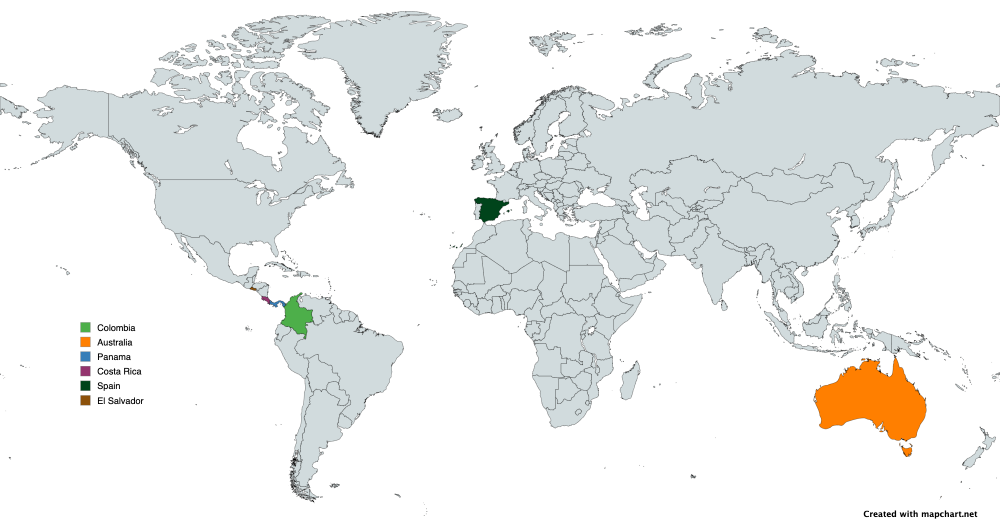
According to Petro, the Pacific interdictions were conducted with the participation of Australia, Panama, Costa Rica, and El Salvador, reflecting ongoing maritime cooperation between Colombia and partner nations along drug trafficking routes that originate in South America and extend across the Pacific. The Atlantic seizure near the Canary Islands was described as having been supported by European law-enforcement authorities, although no individual European countries or agencies were publicly identified.
The cocaine seized in both the Pacific and Atlantic operations was reportedly destined for international markets, particularly Europe and North America, which remain the primary destinations for large-volume maritime shipments leaving Colombia and neighboring producer regions. Colombian officials did not name any specific criminal organizations linked to the shipments, a practice consistent with recent public communications that avoid attributing individual seizures to particular groups unless investigations are complete.
Authorities did not release an official estimate of the financial value of the drugs seized, nor did they provide detailed tactical information about the interdictions, such as vessel types or concealment methods. Colombian officials have increasingly limited the disclosure of operational details, citing the need to protect intelligence sources, ongoing investigations, and international partnerships.
The December seizures come amid sustained enforcement pressure on cocaine supply chains. Colombia reported historically high cocaine seizure totals in 2024, reflecting both intensified interdiction efforts and continued high levels of cocaine production. In Europe, law-enforcement agencies have also reported record or near-record cocaine seizures in recent years, underscoring the continent’s growing role as a major consumer market and transshipment hub for South American cocaine.
President Petro has consistently emphasized that Colombia’s approach to drug enforcement depends on international cooperation rather than unilateral action, arguing that drug trafficking is a transnational issue that requires coordinated responses across producer, transit, and consumer countries. The December operation reflects that approach, combining Colombian naval capabilities with intelligence sharing and operational support from partner nations in the Americas, Europe, and the Pacific region.
While a single seizure is unlikely to significantly alter global cocaine supply on its own, operations of this scale are intended to disrupt trafficking logistics, increase costs for criminal networks, and demonstrate sustained cooperation among participating countries. Colombian authorities have indicated that maritime interdiction, supported by multinational coordination, will remain a central component of ongoing efforts to address cocaine trafficking in the region and beyond.
Colombia = Green
Australia = Orange
Panama = Blue
Costa Rica = Purple
El Salvador = Brown
Spain = Dark Green
Image is licensed under the Creative Commons Attribution-Share Alike 4.0 International license and was created using MapChart (https://mapchart.net).