The Spring Festival, widely known in English as Chinese Lunar New Year (Chūn Jié), is the central annual celebration in Chinese cultural life and a major holiday for Chinese communities around the world. In 2026, the first day of the new lunar year falls on February 17, with festivities beginning the evening before on New Year’s Eve. The celebration continues through March 3, when the Lantern Festival marks the close of the traditional holiday period.
In mainland China, the official public holiday normally lasts about one week, though the exact schedule is announced each year and may be adjusted. Hong Kong and Macau typically observe several days of public holidays, while Taiwan’s break varies depending on the calendar. This period coincides with chūn yùn, the massive seasonal travel rush during which hundreds of millions of people return home for family reunions — often described as the largest annual human migration on earth.
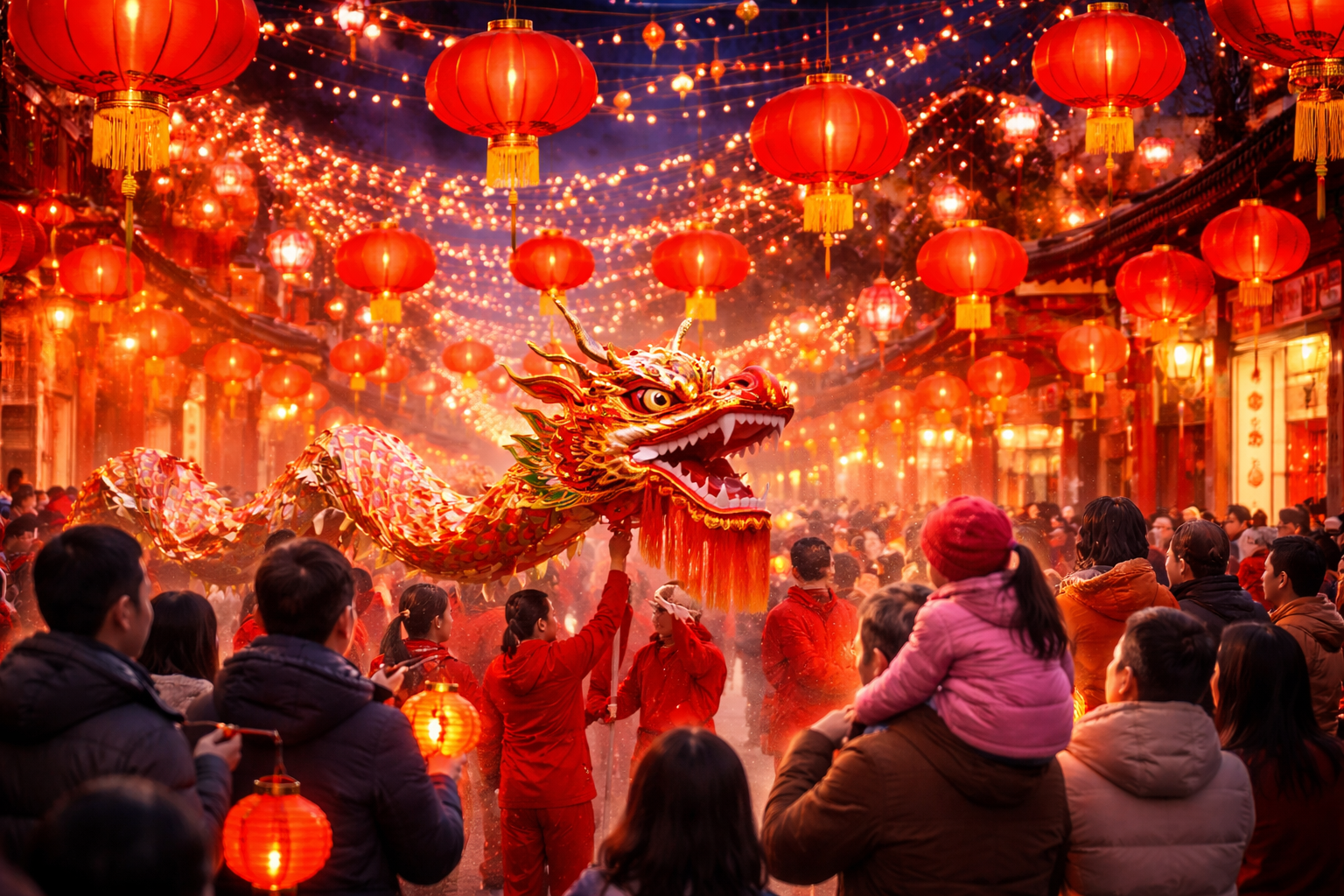
The festival developed from ancient seasonal rituals tied to agriculture. More than three thousand years ago, early communities marked the turning of the year by honoring ancestors and offering prayers for protection and a successful harvest. Over time, these practices gradually formed the foundation of the New Year celebration. One well-known folk story describes a mythical creature called Nian that was said to appear at the start of the year. According to tradition, people discovered that loud sounds, bright red colors, and fire frightened it away, which helped inspire customs such as fireworks, lanterns, and red decorations.
By the Han Dynasty, many elements of the festival had taken recognizable shape. Families gathered for shared meals, cleaned their homes to symbolize a fresh start, and observed rituals to welcome good fortune. Customs continued to evolve across later dynasties. The giving of money in red envelopes (hóngbāo), now a central part of the holiday, became increasingly common in later imperial periods. The term “Spring Festival” came into official use in the early twentieth century after China adopted the Gregorian calendar, helping distinguish the traditional lunar celebration from January 1.
Today, the holiday centers on reunion, renewal, and hopes for prosperity in the coming year. Common traditions include:
- Cleaning homes before the new year to represent clearing away misfortune
- Hanging red couplets (chūnlián), paper cuttings, and lanterns as decorations
- Preparing symbolic foods such as dumplings for prosperity, fish for abundance, rice cakes for upward progress, and sweet glutinous rice balls during the Lantern Festival
- Giving red envelopes filled with money, especially to children and younger relatives
- Watching the nationally broadcast New Year’s Gala on television in mainland China
- Lighting fireworks and firecrackers, though many cities now regulate their use
- Visiting relatives, paying respects to ancestors, and attending temple fairs
The 2026 celebration marks the Year of the Horse, specifically the Fire Horse in the traditional zodiac cycle. The horse is often associated with vitality, movement, and independence, and the fire element is linked with intensity and drive.
Related celebrations take place across East and Southeast Asia. Korea observes Seollal, Vietnam celebrates Tết, and Chinese diaspora communities around the world hold parades, performances, and public festivities. Lion and dragon dances, lantern displays, and fireworks are especially prominent in cities with large overseas Chinese populations.
Year after year, the Spring Festival remains a time for reconnecting with family, honoring tradition, and welcoming a new beginning. Its endurance across centuries reflects its deep cultural importance and its continuing role in bringing people together.
This image is the property of The New Dispatch LLC and is not licenseable for external use without explicit written permission.