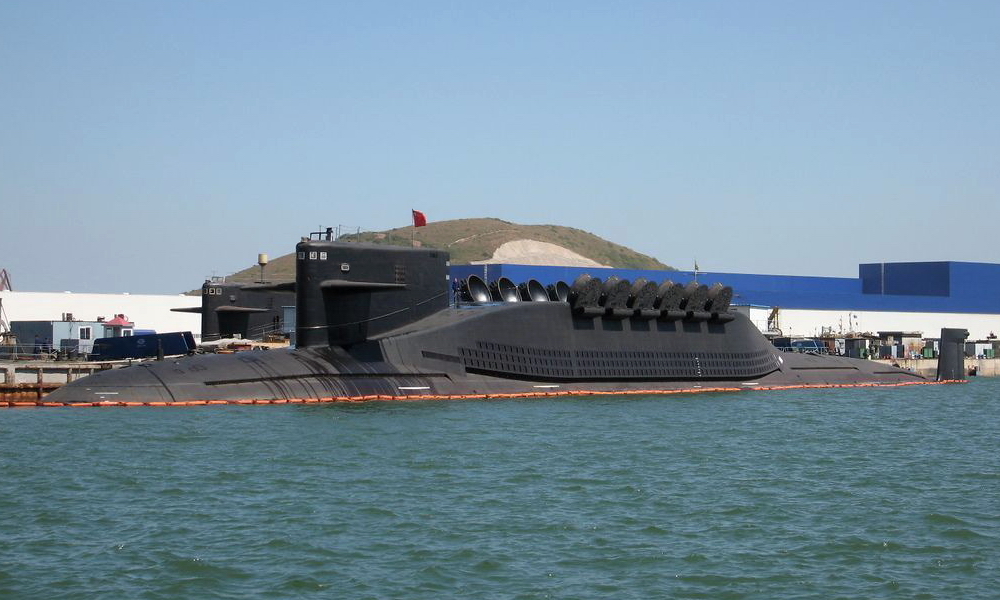
China’s missile test in the South Pacific on Monday brought quick criticism from Australia, New Zealand, Japan, Taiwan and the United States, after Chinese officials said one of the country’s nuclear-powered submarines fired a long-range ballistic missile during a planned military exercise.
The missile had a dummy warhead, according to China’s official Xinhua News Agency. That means it was not carrying a live nuclear weapon. China said the launch happened at 12:01 p.m. local time and was part of regular annual training. Beijing also said the test followed international rules and was not aimed at any country.
Still, several governments in the region reacted strongly. New Zealand said it was told about the test only a few hours before it happened. Officials there also said the missile was fired into the South Pacific Nuclear Free Zone, which was created by the 1986 Treaty of Rarotonga. China agreed to parts of that treaty in 1987, including promises not to test nuclear weapons in the zone or threaten countries covered by it.
New Zealand Foreign Minister Winston Peters said China went ahead with the launch despite concerns his government has raised before. The short warning was part of the frustration. It was not much time.
Australia also called the test destabilizing. Prime Minister Anthony Albanese said the launch was concerning because the missile was nuclear-capable and could travel a long distance if it were armed. He said Australia wants fewer nuclear weapons, not more of them. Australian officials said they would keep raising concerns with China.
The timing also stood out. On the same day, Australia and Fiji signed a new mutual defense treaty. The agreement is meant to strengthen security cooperation in the Pacific, where China has been trying to expand its influence.
Pat Conroy, Australia’s minister for defence industry and Pacific island affairs, said China did not give enough notice before the missile launch. He also said the test did not match international guidance on ballistic missile testing. China rejected that view. A foreign ministry spokesperson said countries had been notified ahead of time and said the launch was safe, organized and professional.
Japan said China should rethink future missile tests so they do not create security risks. Japanese officials also pointed to China’s military growth and lack of transparency as a continuing concern. Taiwan criticized the launch too, saying it was meant to pressure the wider Indo-Pacific region.
The United States said it monitored the test. State Department spokesperson Tommy Pigott said China’s nuclear buildup is worrying to the region and the world. He said Washington wants Beijing to join serious arms control talks and create a regular system for giving notice before future long-range missile or space launches.
Experts said the test may have been meant to show that China’s nuclear forces are not based only on land anymore. A submarine launch matters because it shows China can move part of its nuclear force out into the ocean, where it can be harder to track. China says it follows a “no first use” nuclear policy, but it is also working to modernize the People’s Liberation Army and expand its nuclear capabilities.
Image is in the public domain and was created by U.S. Navy Office of Legislative Affairs (via Ronald O’Rourke, CRS Report RL33153).












_Class_Ballistic_Missile_Submarine.JPG)