As of early 2026, scientists are documenting rapid changes in Antarctic penguin breeding linked to rising temperatures, shifting sea ice conditions, and altered food availability. New long-term research shows that several penguin species are now beginning their breeding season significantly earlier than they did just a decade ago, a shift occurring at an unprecedented rate for vertebrate animals and raising concerns about increased competition and long-term survival.
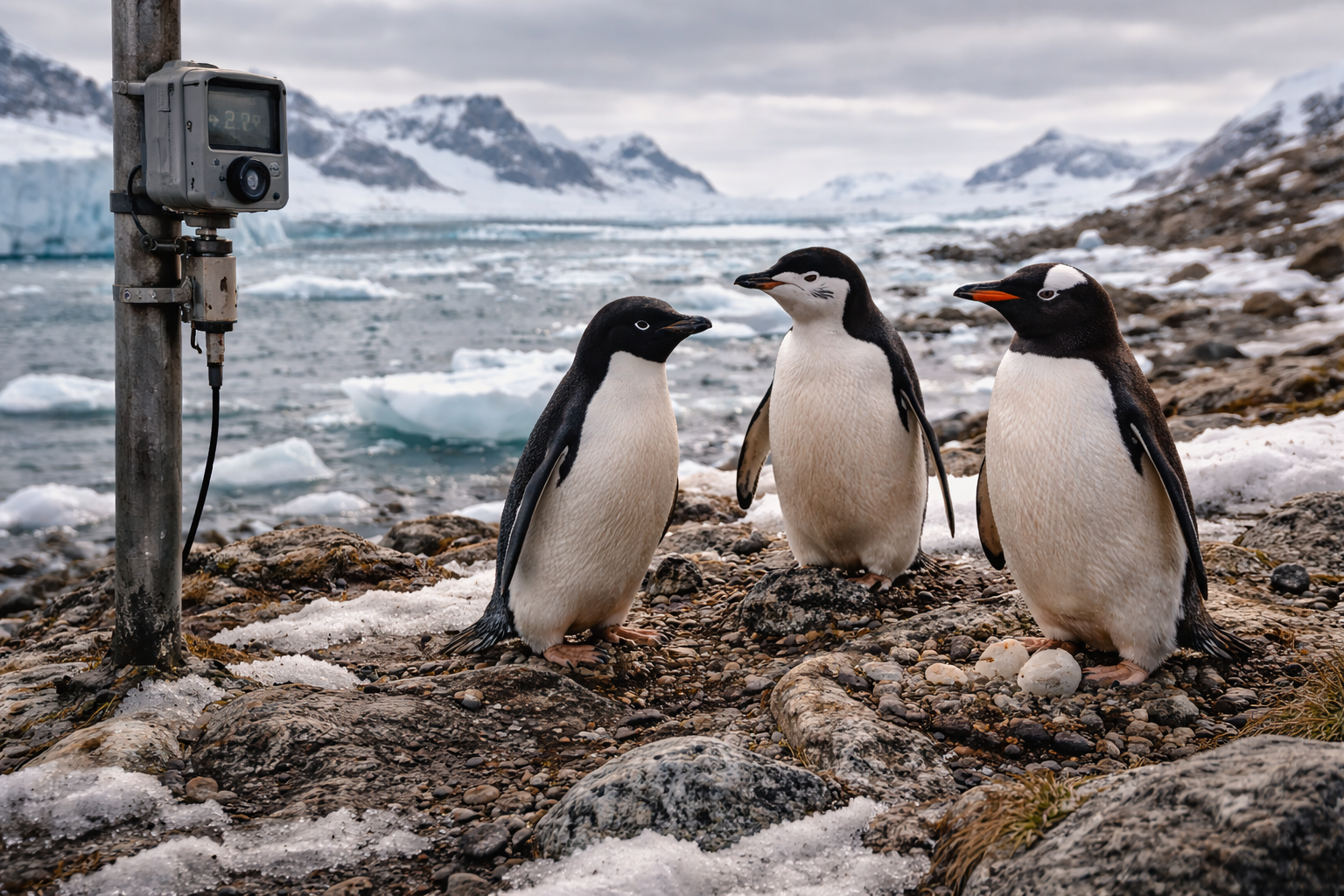
The most detailed evidence comes from a study published in the Journal of Animal Ecology that examined breeding timing in three brush-tailed penguin species, Adélie, chinstrap, and gentoo penguins. Researchers used a network of 77 time-lapse cameras placed at 37 colonies across the Antarctic Peninsula and Atlantic sub-Antarctic islands to track when penguins first settled at their nesting sites between 2012 and 2022. The data showed that all three species advanced the start of their breeding season at record speed. Adélie and chinstrap penguins occupied nesting sites an average of 10 days earlier than they did a decade earlier, while gentoo penguins showed the largest shift, breeding about 13 days earlier on average and as much as 24 days earlier in some colonies.
Temperature sensors attached to the monitoring cameras revealed rapid local warming at breeding sites, averaging roughly 0.3 degrees Celsius per year during the study period. Researchers noted that this rate of warming is several times faster than broader Antarctic averages, indicating that penguin colonies are experiencing some of the most rapid temperature increases on the continent. The timing shifts in breeding were closely correlated with these rising temperatures, suggesting a strong climate-driven influence.
Breeding timing is critical for penguins because it evolved to coincide with predictable peaks in food availability, particularly krill, which form the base of the Southern Ocean food web. Scientists warn that earlier breeding could create a mismatch between when chicks hatch and when food is most abundant, potentially reducing chick survival. The shift may also intensify competition among penguin species. Historically, Adélie and chinstrap penguins, both krill specialists, bred earlier than gentoo penguins, which have a more flexible diet and can forage closer to breeding sites. As gentoo breeding advances more rapidly, the overlap in breeding seasons is increasing, giving gentoos a competitive advantage in securing both food and nesting space. Field observations cited by researchers describe gentoo penguins occupying nesting areas that were previously used by Adélie or chinstrap penguins.
The researchers emphasized that it is not yet clear whether the earlier breeding represents successful adaptation or a forced response that will ultimately harm populations. Ongoing monitoring will be needed to determine whether penguins are able to maintain healthy chick survival rates under these new conditions or whether the pace of environmental change is exceeding their ability to adjust.
Emperor penguins, which were not part of the breeding-timing study, face a different but equally serious threat tied to climate change. Unlike brush-tailed penguins, emperors rely on stable landfast sea ice as a platform for breeding and raising chicks. Satellite-based research has shown that record-low sea ice in 2022 contributed to widespread breeding failures at multiple emperor penguin colonies in the Bellingshausen Sea region, where the ice broke up before chicks were old enough to survive in open water. These events highlight how sensitive emperor penguins are to changes in sea ice stability rather than shifts in breeding timing.
Together, the findings point to a growing pattern of climate-driven winners and losers in Antarctica. Gentoo penguins, which are more generalist and tolerant of milder conditions, are expanding their range in parts of the Antarctic Peninsula. In contrast, chinstrap and Adélie penguins, which depend more heavily on krill and specific ice conditions, are declining in several regions. Researchers involved in the breeding-timing study noted that climate models suggest chinstrap penguins could face global extinction risk by the end of the century if current trends continue, while Adélie penguins may disappear from parts of the Antarctic Peninsula. These projections are based on models rather than certainties, but they underscore the scale of the challenge facing Antarctic wildlife.
The accelerating changes observed through remote cameras and satellite monitoring provide some of the clearest, most direct evidence yet that climate change is already reshaping ecosystems in Antarctica. Whether penguins can continue to adjust their breeding behavior fast enough to keep pace with warming temperatures, changing sea ice, and shifting food webs remains an open question, one with implications far beyond the polar regions.
This image is the property of The New Dispatch LLC and is not licenseable for external use without explicit written permission.