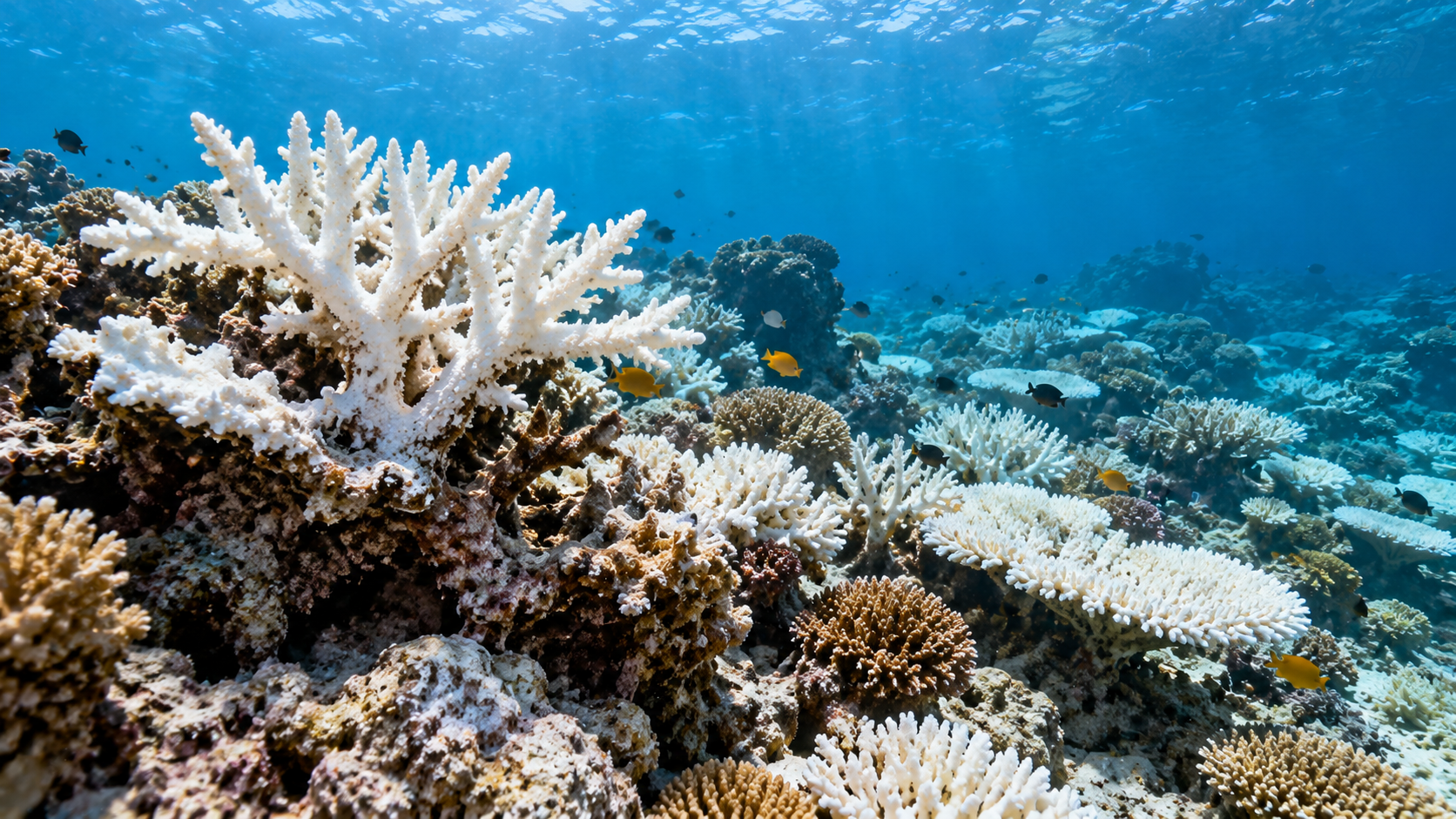
Coral reefs provide food, shelter and breeding areas for marine animals, but their future is becoming increasingly uncertain as ocean temperatures climb. A new assessment from the International Union for Conservation of Nature (IUCN) suggests that most shallow-water reef ecosystems could lose their ability to survive within the coming decades.
The findings were presented Thursday at the COP17 biodiversity conference in Yerevan, Armenia. Researchers placed 96% of the reef ecosystems they assessed in the critically endangered category after considering the effects of future climate change. That classification means they face an extremely high chance of collapsing by 2075.
Scientists studied 127 reef regions in tropical and subtropical waters, covering an area of 188,362 square kilometers. The project involved more than 250 specialists and included information from over 80 countries and territories. It was the first worldwide examination of coral reef ecosystems using the IUCN Red List of Ecosystems.
The difference between current conditions and future projections was large. Based on damage already observed, roughly 24% of reefs qualified as critically endangered. Once researchers considered additional warming, the percentage reached 96%.
Their calculations used a climate projection in which average global temperatures increase by 2.7 degrees Celsius compared with pre-industrial conditions by 2100. Continued ocean warming was a major concern in the assessment.
One problem is coral bleaching. During periods of unusually warm water, corals can lose the algae they depend on for nutrients. They may survive the experience, but repeated exposure can leave them weak and more likely to develop diseases.
Previous research has already documented widespread problems. One survey found bleaching had reached 84% of ocean reefs, while a separate study reported that nearly 44% of coral species responsible for building reefs were at greater risk of extinction.
Australia’s Great Barrier Reef is among the ecosystems facing an uncertain future. All 17 Australian reef regions examined reached the critically endangered level when projected climate conditions were included. Other threatened areas include reefs in the Red Sea and the Coral Triangle.
For people living near the ocean, reef losses could affect everyday life as well. Fishing communities depend on the marine animals living around corals, while tourism businesses benefit from healthy reef environments. Reefs also reduce the force of waves reaching coastlines during storms.
Researchers have not ruled out recovery. Some coral populations have survived severe bleaching, and conservation efforts could give remaining reefs a better chance. Cutting emissions and reducing damage from fishing, pollution and coastal construction are among the measures identified.
Work on coral restoration is also underway in the Bahamas. The MSC Foundation is studying corals that tolerate warmer conditions and raising them in underwater nurseries at Ocean Cay. Its programme has successfully grown elkhorn coral, an endangered species that helps form the underwater structures used by other marine animals.
The foundation’s Marine Conservation Center, which opened in 2025, supports this research and provides educational opportunities for Bahamian students and researchers. The programme continues to monitor nursery-grown corals and develop restoration techniques.
This image is the property of The New Dispatch LLC and is not licenseable for external use without explicit written permission.