American and Nigerian forces carried out a military operation in northeastern Nigeria on Friday(5/15/26) that resulted in the death of Abu Bakr al-Mainuki, a senior ISIS-linked leader tied to militant activity in West Africa.
The operation was announced late last Friday night by President Donald Trump in a social media post. Trump said al-Mainuki had been hiding in Africa while continuing to help organize extremist operations connected to ISIS. He described the militant leader as one of the group’s top global figures, though some analysts later disputed that description and argued his influence was mostly centered within ISIS networks in West Africa.
Nigerian officials also confirmed the strike. President Bola Tinubu said several other militants were killed during the mission, which reportedly targeted a compound in the Lake Chad Basin region. That area has been linked to insurgent activity for years and remains one of the most unstable parts of the region. Few operational details were released publicly, and neither government explained exactly how the raid was carried out.
After Trump’s announcement, U.S. Africa Command released a statement saying the mission was coordinated closely with Nigerian forces. The military said the operation led to the deaths of multiple ISIS members, including a man it identified as Abu-Bilal al-Minuki. AFRICOM described him as a senior figure involved in international ISIS operations and said no American troops were injured during the mission.
Military officials claimed al-Minuki had responsibilities connected to financing, propaganda, and weapons development inside ISIS networks. They also accused him of involvement in organizing attacks and hostage operations. Some of those claims have not been independently confirmed outside official government statements, and information surrounding the operation is still limited.
Researchers who study armed groups in West Africa said al-Mainuki had been an important figure within the Islamic State West African Province, known as ISWAP. According to the Counter Extremism Project, he was born in Nigeria’s Borno State in 1982 and rose through the ranks after the death of another ISWAP leader, Mamman Nur, in 2018. The group also believes he may have spent time fighting in Libya during the years when ISIS maintained a stronger presence there.
The United States sanctioned al-Mainuki in 2023. Analysts following militant organizations in the Sahel region said his death could affect ISWAP operations, at least in the short term. Malik Samuel, a researcher with Good Governance Africa, said the strike appeared to hit an area usually considered difficult for outside forces to reach. He said that alone made the operation unusual.
Nigeria has struggled with insurgencies involving Boko Haram and ISIS-linked factions for more than a decade. Violence from those groups has spread across parts of the Lake Chad region and into neighboring countries. Since the collapse of ISIS-controlled territory in Syria and Iraq several years ago, extremist groups connected to the organization have become more active in parts of Africa.
The United States has increased its military cooperation with Nigeria in recent months. Earlier this year, American personnel were sent to advise Nigerian forces, and U.S. drones were later deployed as part of broader counterterrorism efforts. Last Friday’s operation was one of the clearest public examples so far of that growing partnership between the two countries.
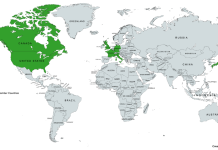
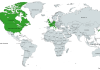
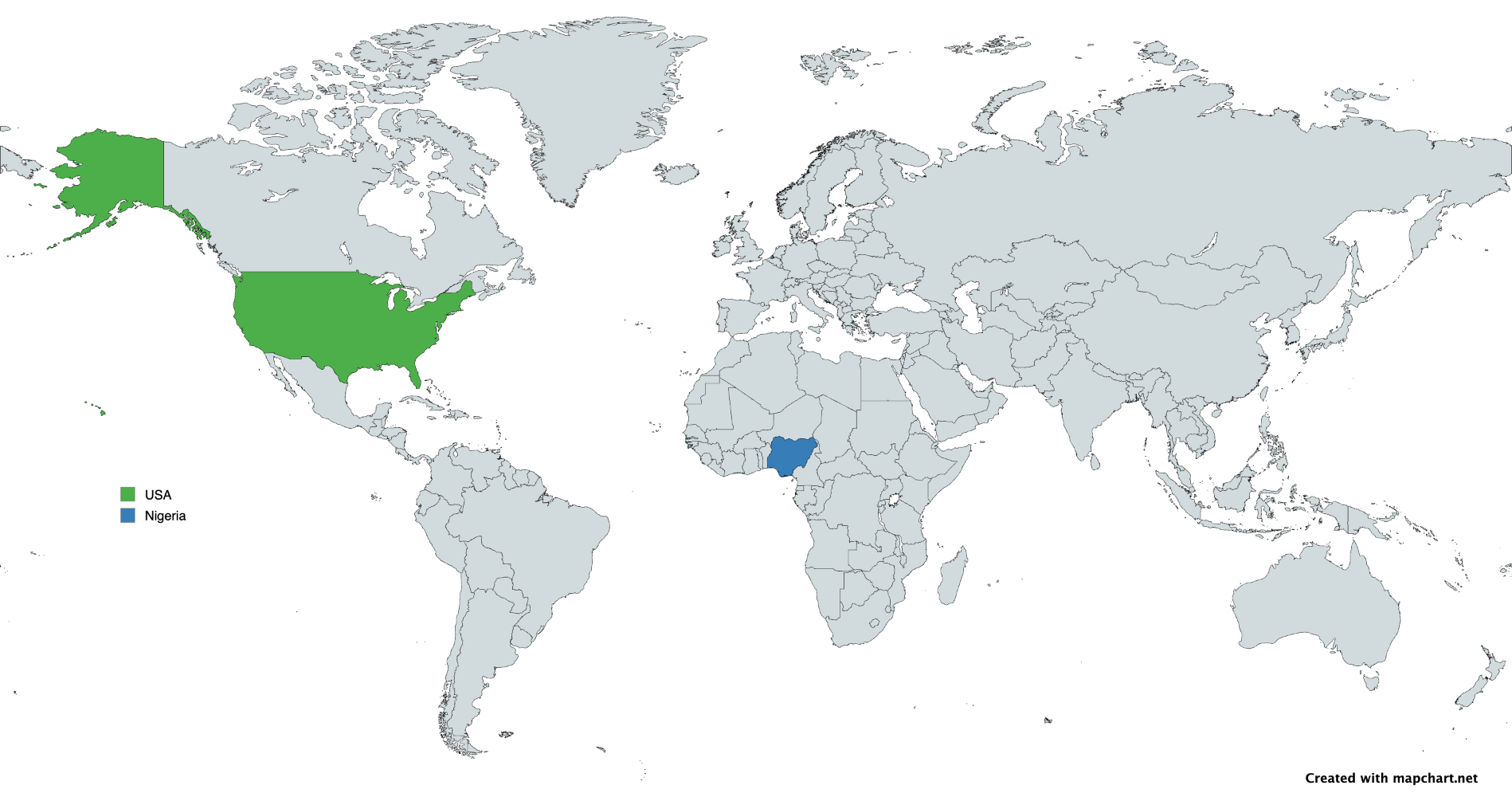
USA = Green
Nigeria = Blue
Image is licensed under the Creative Commons Attribution-Share Alike 4.0 International license and was created using MapChart (https://mapchart.net).