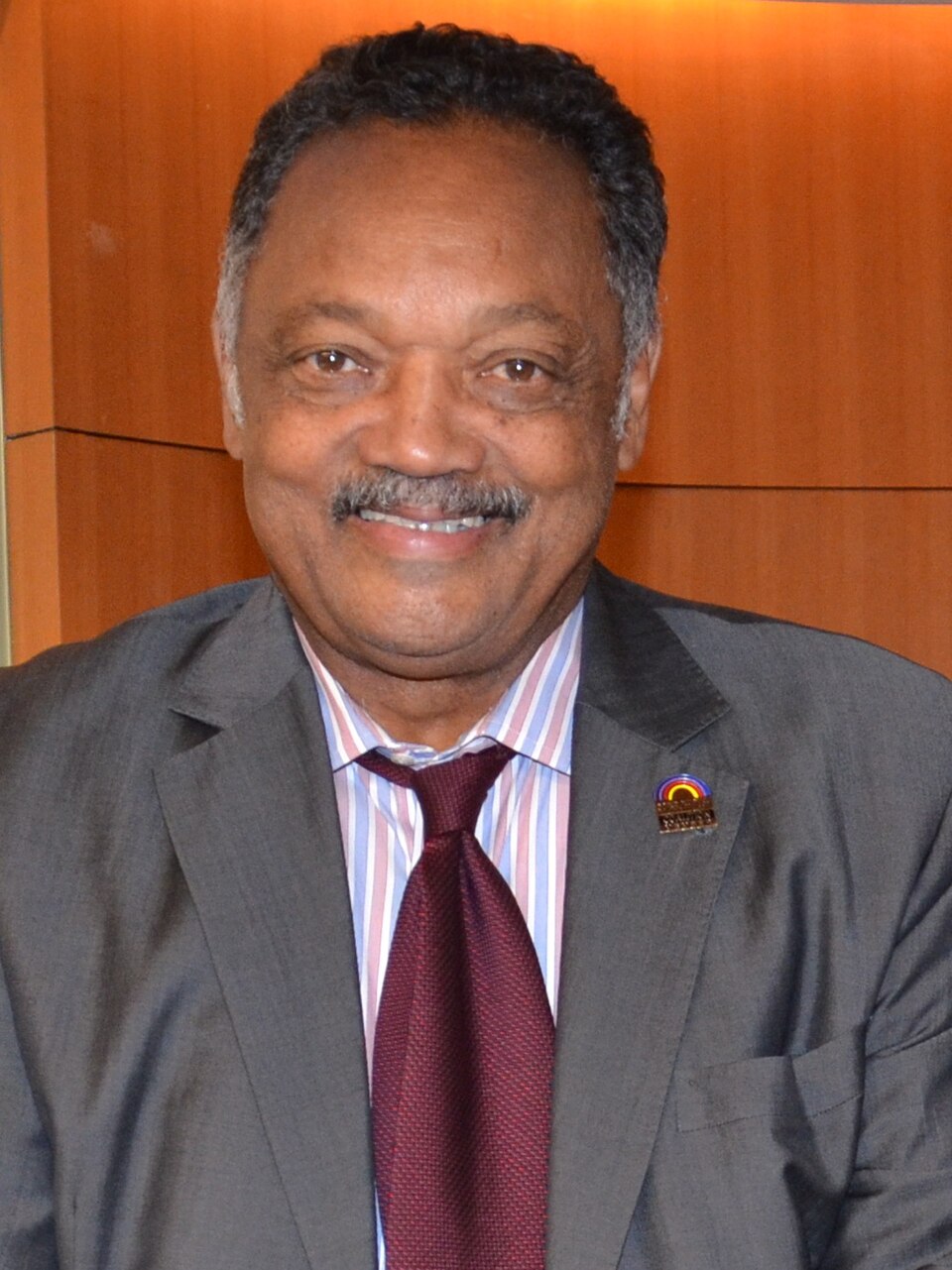
The Rev. Jesse Jackson, a Baptist minister who became one of the best-known civil rights advocates in modern American life and twice sought the Democratic presidential nomination, died Tuesday at 84, according to his family. They said he passed away peacefully with relatives at his side, and public gatherings are expected in Chicago, with additional plans to be shared by the Rainbow PUSH Coalition.
Jackson’s public life stretched across generations of activism, from the street-level organizing of the 1960s to the coalition politics of later decades. Born in Greenville, South Carolina, he came of age as the Civil Rights Movement was reshaping the country. After studying at North Carolina A&T State University and later pursuing theological training in Chicago, he moved from campus activism into national organizing. He participated in marches, sit-ins, and voter-rights efforts, and he became a close collaborator of the Rev. Dr. Martin Luther King Jr., joining the Southern Christian Leadership Conference and working on initiatives that pressed companies to hire Black workers and invest in Black neighborhoods.
Jackson was in Memphis in 1968 when King was assassinated, an event that marked a turning point for the movement and for Jackson’s own path. In the years that followed, he pushed forward with an emphasis on jobs, voting access, and economic opportunity. In 1971 he founded People United to Save Humanity, known as Operation PUSH, which later grew into the Rainbow PUSH Coalition. Through boycotts, negotiations, and sustained public pressure, the organization challenged businesses and institutions to broaden access to employment and contracts, while also urging civic participation through voter registration and community organizing.
Jackson’s reach extended into electoral politics. His presidential campaigns in 1984 and 1988 helped expand the Democratic primary electorate and encouraged alliances among Black voters, working-class communities, labor, and groups focused on social programs and civil liberties. While he did not win the nomination, his campaigns pushed themes that later became central to party debates, including poverty, opportunity, and representation. He often returned to a simple, repeated message meant to lift people who felt dismissed: “I am somebody.”
His career also included moments that drew criticism. During the 1984 campaign, he faced backlash for derogatory remarks about Jewish people. After initial denials, he acknowledged the language and offered a public apology. The episode remained a painful chapter in a life otherwise defined by appeals to solidarity and broad-based organizing.
Beyond U.S. politics, Jackson took on the role of mediator in international disputes and humanitarian crises, helping win the release of Americans held overseas, including U.S. soldiers detained in Yugoslavia in 1999 and other captives in places such as Syria, Cuba, and Iraq. President Bill Clinton awarded him the Presidential Medal of Freedom in 2000, tied in part to those efforts.
In later years, Jackson’s health declined. He disclosed in 2017 that he had Parkinson’s disease, and he later lived with progressive supranuclear palsy, a condition that can affect movement, speech, swallowing, and balance. Even with those challenges, he remained visible at public events, including appearances that drew warm reactions from supporters.
After news of his death, tributes came from across the political spectrum. Allies described him as a forceful preacher and organizer who carried the language of the Black church into campaigns for dignity, voting rights, and fair treatment. For many Americans, Jackson’s long career stands as a reminder that public life can be used not only to seek office, but also to press institutions to answer to those too often left out.
Image is licensed under the Creative Commons Attribution 2.0 Generic license and was created by AFGE.






_(1).jpg)