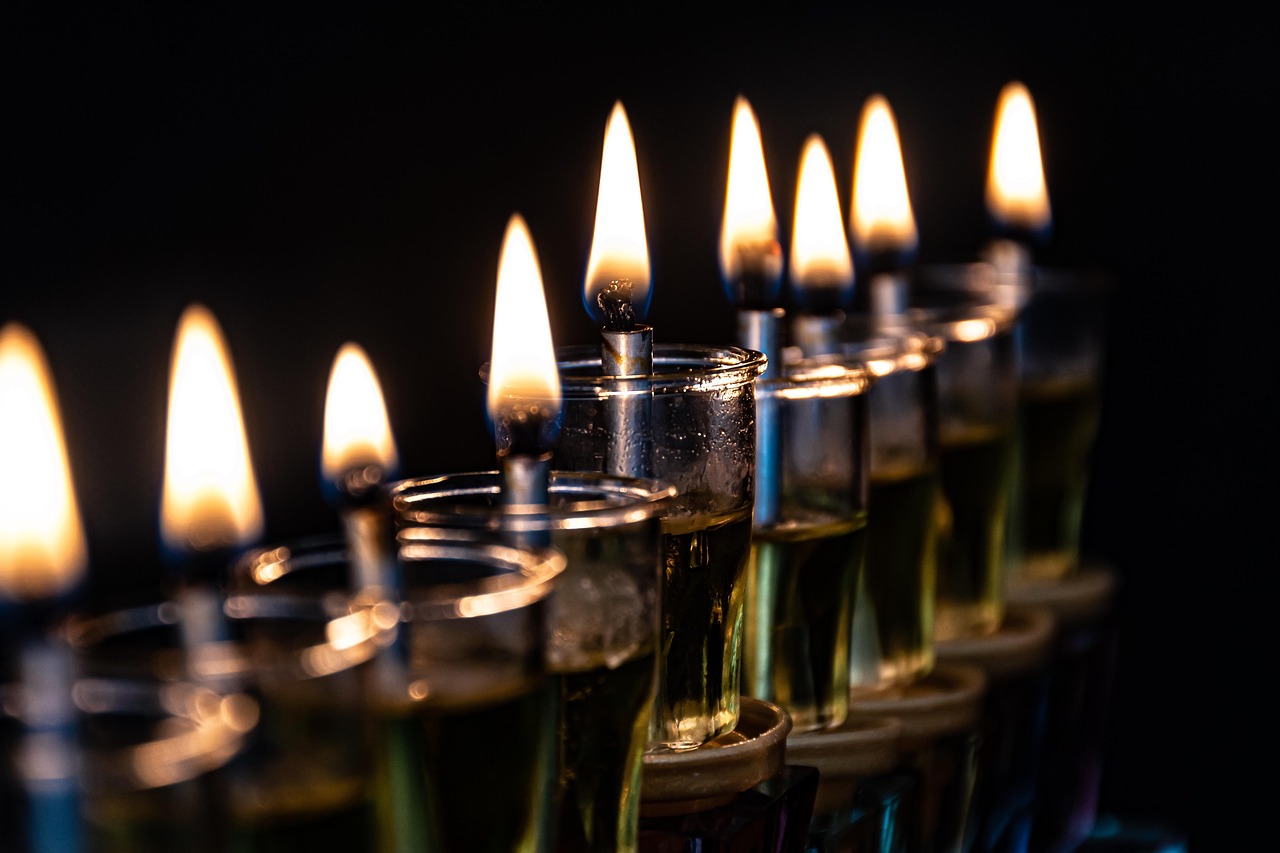
As the sun sets on Sunday, December 14, 2025, Jewish families around the world will light the first candle on their menorahs, beginning the eight-day celebration of Hanukkah, the Festival of Lights, which continues through the evening of Monday, December 22, 2025. The holiday begins on the 25th of Kislev in the Hebrew calendar and is also spelled Chanukah, a word meaning “dedication.”
Hanukkah commemorates the rededication of the Second Temple in Jerusalem in the second century BCE and celebrates themes of faith, resilience, and religious freedom. As homes glow with candlelight and the aroma of fried foods fills the air, the holiday’s story offers a timeless reminder of perseverance and renewal.
The origins of Hanukkah lie in the Maccabean Revolt of the second century BCE, when the Jewish population of Judea rose up against the Seleucid Empire under King Antiochus IV Epiphanes. Antiochus imposed policies that restricted Jewish religious practice, including bans on Torah study, circumcision, and Sabbath observance. Historical sources such as the Books of Maccabees and the writings of the historian Josephus describe the desecration of the Second Temple and the suppression of Jewish worship during this period.
Led by Judah Yehuda Maccabee and his brothers, a relatively small Jewish force waged a successful uprising against the Seleucid army. After reclaiming Jerusalem, the Maccabees purified and rededicated the Temple on the 25th of Kislev, an event that became the foundation of the Hanukkah festival.
While early historical accounts focus on the military victory and the Temple’s rededication, later rabbinic tradition added a spiritual dimension that is now central to the holiday. The Talmud recounts that when the Temple was restored, only a single day’s supply of ritually pure olive oil was found to light the menorah. According to tradition, the oil burned for eight days, long enough for new oil to be prepared, giving rise to the central ritual of Hanukkah.
Today, that miracle is commemorated through the lighting of the hanukkiah, a nine-branched menorah. One candle is lit on the first night of Hanukkah, with an additional candle added on each successive night. A ninth candle, known as the shamash, is used to light the others. Special prayers, including Al HaNissim, are added to daily services, and the Hallel psalms are recited throughout the holiday.
Over centuries, Hanukkah customs evolved across Jewish communities. Foods fried in oil became traditional, symbolizing the miracle of the oil. Ashkenazi Jews popularized latkes and sufganiyot, while Sephardic and Middle Eastern communities developed their own fried delicacies, such as bimuelos and sfenj. The dreidel game, featuring Hebrew letters commonly interpreted as “A great miracle happened there,” emerged in Europe during the early modern period. Gift-giving and the distribution of Hanukkah gelt became widespread in the nineteenth and twentieth centuries, influenced in part by the holiday’s proximity to Christmas in predominantly Christian societies.
Today, Hanukkah is observed by Jewish communities worldwide through family gatherings, public menorah lightings, educational programs, and cultural events. While it is considered a minor holiday in the traditional Jewish religious calendar, Hanukkah has taken on broader symbolic meaning, particularly its message of light overcoming darkness and the enduring strength of religious identity.
From the rededicated Temple in ancient Jerusalem to menorahs glowing in windows around the globe, Hanukkah continues to tell a story of perseverance and hope, reminding each generation to kindle light even in uncertain times. Chag Sameach.
Image is in the public domain and is licensed under the Pixabay Content License