The federal government has launched an ambitious new effort, known as the Genesis Mission, designed to change how scientific work is performed across the United States. Signed into action by President Donald J. Trump, the initiative seeks to combine artificial intelligence with the nation’s most advanced computing systems and scientific datasets, creating a unified research environment unlike anything previously attempted in federal science.
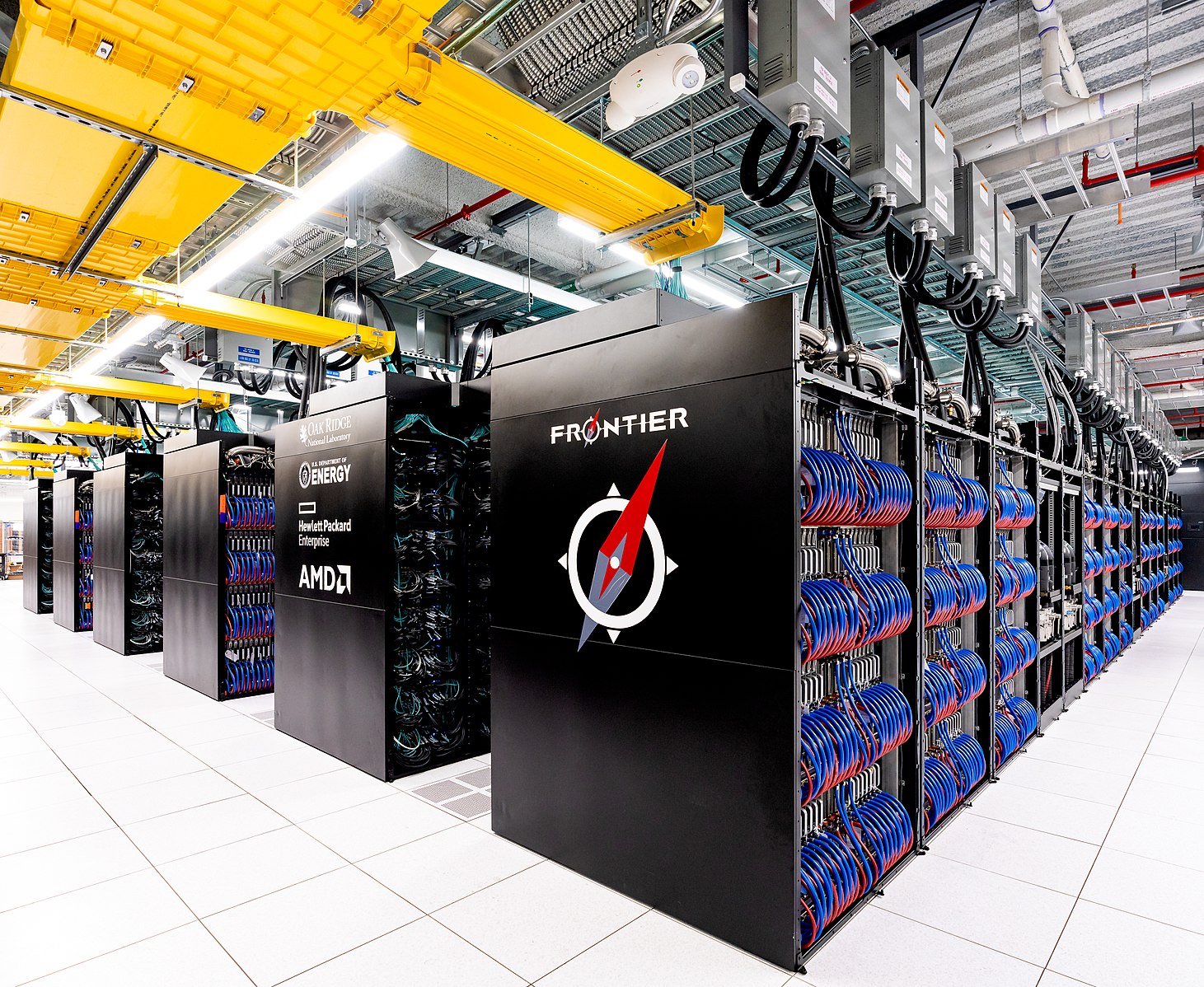
At the heart of the plan is the Department of Energy, which oversees 17 National Laboratories housing expansive scientific databases, advanced instruments, and supercomputers capable of processing staggering volumes of information. Under the executive order, the agency will develop an AI-driven platform that brings these resources together. The platform will support foundation models tailored for scientific use, as well as robotic labs capable of running experiments designed and refined by AI systems.
The White House has appointed Michael Kratsios, serving as the President’s chief science adviser, to coordinate the effort across multiple agencies. His role includes ensuring that federal datasets—many of which have remained siloed or underused—are organized, secured, and made ready for AI training and research workflows. By fusing data and compute power, the administration aims to shorten research cycles and open the door to new pathways of exploration.
The Genesis Mission identifies several scientific domains where rapid progress could strengthen the country’s future. These fields include biotechnology, energy technologies such as fission and fusion, advanced materials, quantum science, microelectronics, and efforts related to space. Each area represents a major challenge that requires new tools, faster experimentation cycles, and larger volumes of data than human researchers can efficiently process alone.
According to administration officials, AI is uniquely suited for these tasks. Modern AI systems can design experiments, sift through massive datasets, simulate complex physical processes, and discover patterns that would be extremely difficult for humans to detect. Tasks that once required years of manual research could, with the proper training data and computing infrastructure, be completed in a small fraction of that time.
The initiative also seeks to expand collaboration between government and private industry. Within months, the Department of Energy must identify which systems and datasets can be made available to outside partners while still protecting privacy, intellectual property, and national security concerns. This openness is meant to accelerate the development of new AI tools and to strengthen connections between federal research institutions and the technology sector.
The Genesis Mission forms part of a broader administration agenda aimed at elevating American leadership in artificial intelligence. Recent executive actions have focused on supporting AI education, reducing regulatory bottlenecks, promoting advanced AI exports, and steering federal AI systems toward clear, practical applications.
Officials argue that the federal government is uniquely positioned to drive progress because it holds vast scientific data collected over decades. By pairing these resources with AI and high-performance computing, the administration hopes to energize scientific innovation and equip researchers with tools that match the complexity of today’s challenges.
Image is licensed under the Creative Commons Attribution 2.0 Generic license and was created by OLCF at ORNL.









.jpg)