Yesterday, President Donald Trump confirmed that the U.S. military launched airstrikes against three nuclear sites in Iran—Fordow, Natanz, and Isfahan—marking a turning point in the ongoing hostilities between Iran and Israel. The attack represents the first direct U.S. military action on Iranian territory in the current conflict.
Trump announced the operation via social media, stating that “a full payload of bombs” was dropped, with the primary target being the underground facility at Fordow. He praised U.S. forces for the mission and urged Iran to choose peace moving forward.
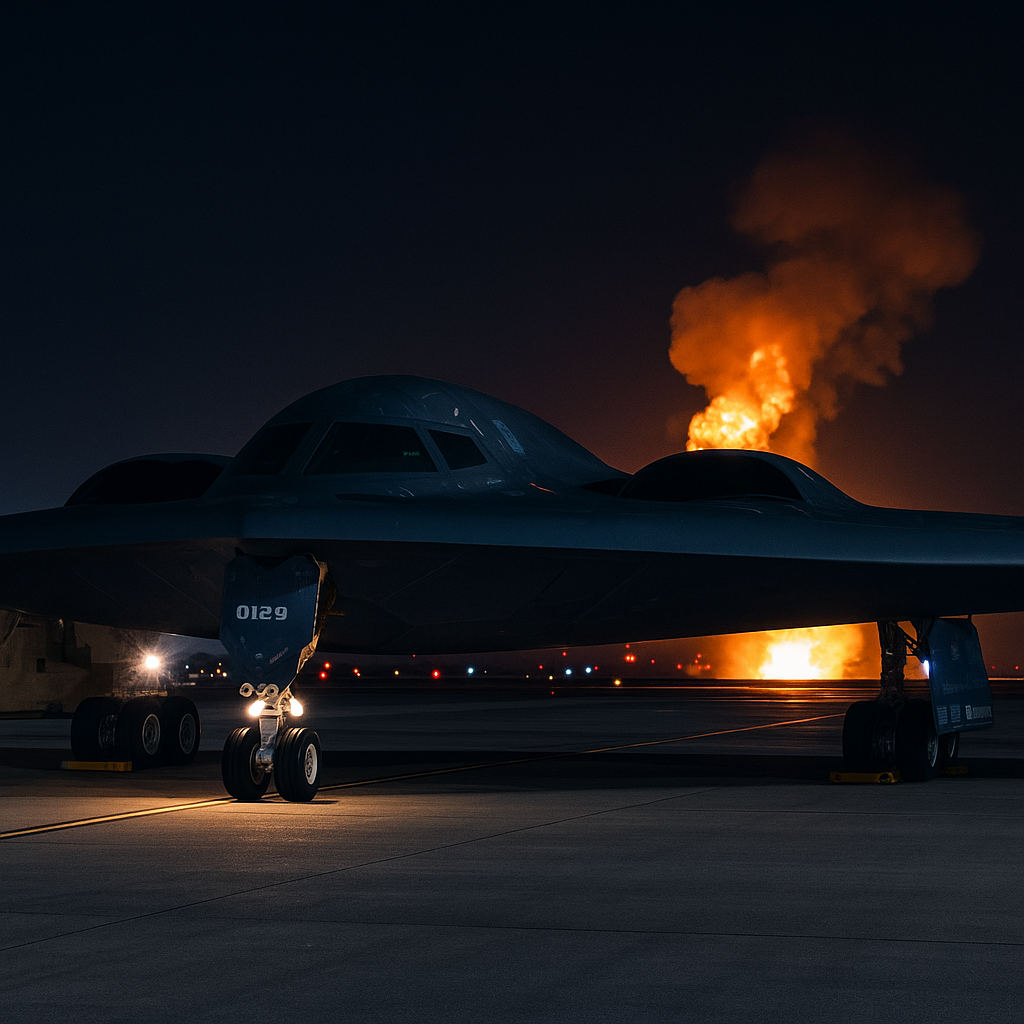
The strikes were carried out by B-2 stealth bombers reportedly armed with GBU-57 Massive Ordnance Penetrators—bombs designed specifically to reach deep underground structures. These aircraft are based at Whiteman Air Force Base in Missouri and are currently the only platform capable of delivering this type of munition.
Iranian state media confirmed that the nuclear sites had been targeted. However, the Atomic Energy Organization of Iran released a statement asserting that the attacks would not halt the country’s nuclear program. The agency described the facilities as the product of years of scientific development and emphasized national unity in the face of foreign aggression.
The international response has been swift. Israeli Prime Minister Benjamin Netanyahu praised Trump’s decision, calling the military action a powerful blow against Tehran’s ambitions. Netanyahu said that only the U.S. had the tools to reach and damage such heavily fortified sites.
In contrast, criticism from Democratic leaders in the United States focused on the lack of prior congressional approval. House Minority Leader Hakeem Jeffries warned that the strike increased the likelihood of a wider war, while former National Security Council spokesperson Tommy Vietor raised concerns about delayed retaliation from Iranian or allied forces.
Iran’s next steps remain unclear. The country maintains a variety of military options, including missile systems and proxy forces throughout the region. Iran also controls strategic waterways like the Strait of Hormuz, through which a substantial portion of global oil supply passes. Any disruption there could have worldwide economic effects, but would also impact Iran’s own exports.
Security measures are already being implemented elsewhere. The New York Police Department confirmed the deployment of additional officers to sensitive locations across the city, including religious and diplomatic sites.
The Fordow facility, buried deep within a mountain, has long been considered one of Iran’s most secure sites. Its destruction—if confirmed—would represent a major setback to Iran’s enrichment efforts. Still, without detailed damage assessments from U.S. defense officials or international inspectors, the full effect of the strike remains to be seen.
The decision to launch the operation came after more than a week of Israeli strikes on Iranian military and nuclear infrastructure. Though Trump initially opposed Israeli military action, recent briefings reportedly persuaded him that direct U.S. involvement was necessary.
While the White House has not confirmed further operations, the tone of Trump’s address and his calls for Iran to cease its program suggest that the administration views the action as a warning—and potentially a prelude to more.
This image is the property of The New Dispatch LLC and is not licenseable for external use without explicit written permission.